




The first sign is not always that someone cannot hear. It is often that they leave dinner early, stop adding stories, or smile through a joke that everyone else caught. That is why group conversations are exhausting with hearing loss: the listener is not simply receiving sound. They are working, guessing, watching faces, filling gaps, and deciding whether it is worth asking people to repeat themselves again.

If this has started to happen often, a simple web-based hearing test can be a low-pressure first check before buying anything. It does not replace professional care when symptoms are sudden, one-sided, painful, dizzy, or medically unclear, but it can help a reader decide whether the pattern deserves attention.
The Real Problem Is Competing Speech
One-on-one conversation gives the brain a cleaner job. One voice, one face, one topic. Group conversation asks the listener to do much more. Voices overlap, chairs scrape, someone laughs from the side, and the topic changes before the listener has finished decoding the last sentence.
Hearing loss often makes certain speech cues softer or less distinct. In a group, those missing cues matter more because there is less time to recover. The listener may hear the sound of speech but miss the shape of the words. That is why a person can seem fine in a quiet car and completely drained at a busy birthday dinner.
The NIDCD notes that age-related hearing loss can interfere with understanding speech in noisy environments. That detail matters because many adults blame themselves for not concentrating hard enough. Concentration helps, but it cannot fully compensate for sound information that is not reaching the brain clearly.
Listening Fatigue Builds In Small Moments
Fatigue does not arrive all at once. It builds when the listener has to keep making tiny decisions. Did he say “meeting” or “movie”? Was that question meant for me? Should I ask again or let it pass? Is everyone annoyed that I missed it?
Those decisions are invisible to the people at the table. To the listener, they can turn a normal evening into a mental workout.
This is why the problem is often underreported. The person may say, “I am just tired,” or “restaurants are too loud,” instead of naming hearing loss. They may still enjoy the people in the room but dread the work of keeping up. Over time, that dread can look like disinterest, when it is really listening fatigue.
Do Not Judge Hearing By Quiet Rooms
A quiet living room can give a false sense of confidence. The listener may follow a spouse across the couch, hear the doorbell, and understand a slow phone call. Then the same person misses half of a family lunch.
That contrast does not mean the problem is imaginary. It means the test environment changed. A good personal check should include at least three settings: quiet conversation, a small group at home, and one noisy public place. If the same strain appears only when several people talk, the reader should pay attention to speech-in-noise support rather than only basic volume.
Yeasound's OTC hearing aid sound technology page is useful here because this is not just a “make everything louder” problem. In group settings, clearer speech handling and noise management matter more than raw loudness.
What Helps Before Buying Anything
Some changes cost nothing and can reduce the strain. Sit with a wall behind you instead of a noisy open room. Choose the corner seat where faces are visible. Ask one person to repeat the topic instead of asking the whole table to replay every sentence. Move serious conversation away from the kitchen fan, TV, or speaker.
The listener can also say something simple before the conversation starts: “I hear better if I can see faces.” That is not a speech about hearing loss. It is a practical instruction.
The ASHA communication tips are a helpful outside reference because they remind families not to shout, to face the listener, and to reduce background noise when possible. Those habits do not solve every hearing problem, but they can make social time less exhausting while the reader decides what to try next.
When A Device Becomes Worth Comparing
A hearing aid becomes worth comparing when the same group problem repeats across different places. One bad restaurant is not enough evidence. A pattern across family dinners, work lunches, church groups, volunteer events, and birthday parties is different.
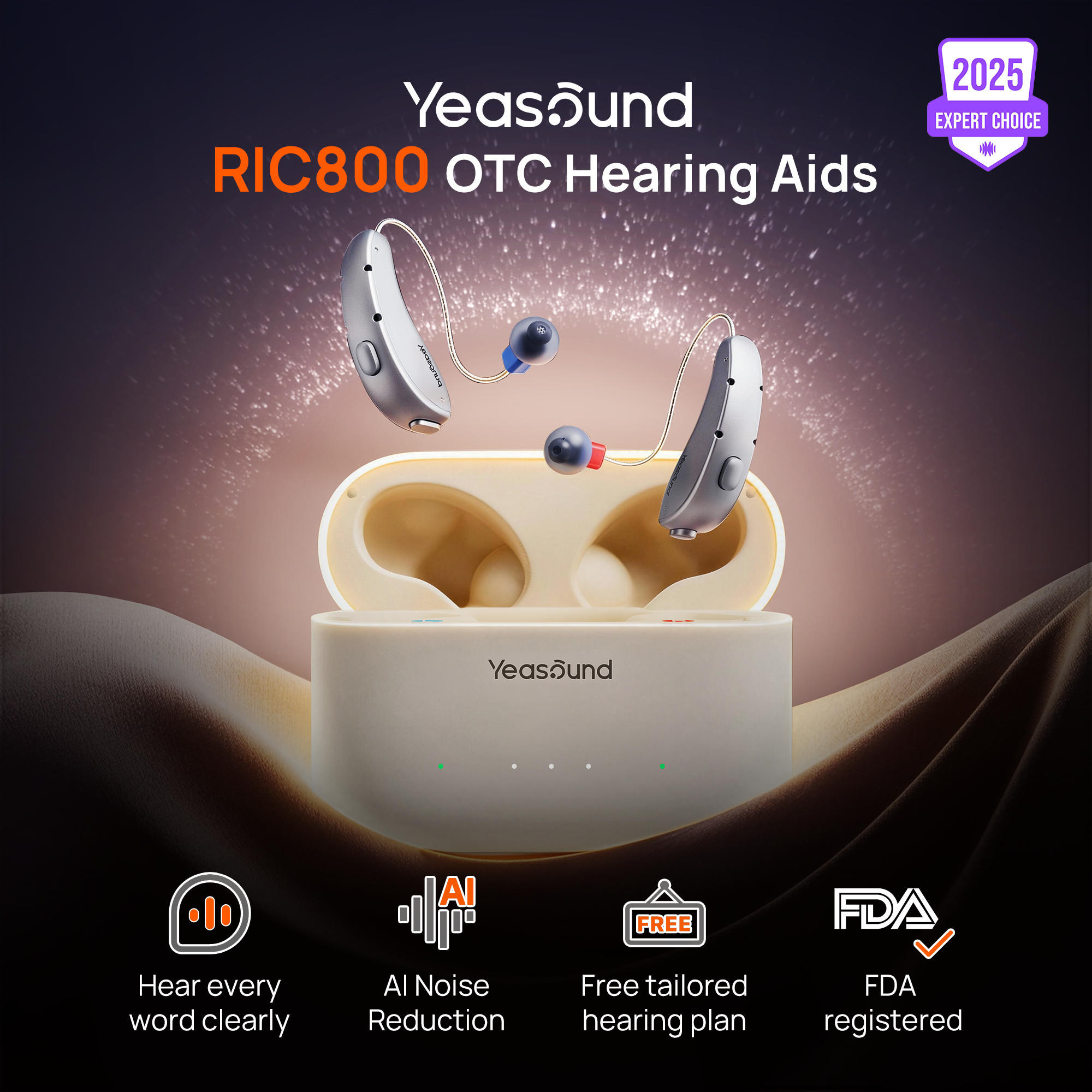
If the reader wants an available OTC option for changing noise and group speech, Yeasound RIC800 is relevant only because its speech-focused processing, AI noise reduction, app controls, and Bluetooth support connect to real group-listening problems. It should still be tested in the exact places where fatigue happens, not judged from a product page.
This is also where the iYeasound app can matter for some users. The app is for control and support resources, not hearing testing. If a wearer can adjust volume, programs, treble/bass, and support settings without making the social moment awkward, the technology is serving the situation instead of becoming another task.
Visibility Can Be Part Of Social Fatigue
Not every group problem is only about sound. Some people avoid hearing help because they do not want their device to become the first topic at the table. They may be willing to struggle through conversation if the alternative feels like explaining themselves in public.

That concern should not be dismissed as vanity. For adults who work, date, travel, volunteer, or socialize often, personal style can affect whether they actually wear hearing support. The reader should still judge any new style by comfort, handling, and group-speech performance, not just by how discreet it looks.
A fair trial should not ask, “Did everything sound perfect?” That question sets the reader up for disappointment. Better questions are smaller and more honest.
Could I follow the main topic longer than usual? Did I ask for fewer repeats? Did I feel less drained after an hour? Could I handle one noisy meal without giving up? Did I wear the device because it helped, or remove it because it bothered me?
The reader can keep notes for 30 days, but the notes should be short. Place, people, noise level, comfort, and one sentence about what improved. That is enough. The goal is not to turn social life into a medical chart; it is to stop judging the whole decision from one unusually good or bad evening.
What To Ask For Without Making The Moment Heavy
The listener does not need to announce a medical issue every time they sit down. Small, plain requests are usually better. “Can I sit on this side so I can see everyone?” is easier than explaining the whole history of hearing difficulty. “Tell me the topic if I look lost” gives one trusted person a useful role without making the dinner feel formal.
It also helps to change the expectation around repeats. A repeat should not be a punishment for the speaker or an apology from the listener. In a good group, people repeat in a different way, not just louder. They give the missing noun, the name, or the punchline setup. That keeps the conversation moving and reduces the shame that often causes people to withdraw.
For families, this is a good place to be practical. Turn the TV off during meals. Do not start important talk from another room. Avoid asking questions while walking away. These are small manners, but for someone with hearing loss, they can decide whether the person joins the evening or watches it happen from the edge.
Why are group conversations harder than one-on-one conversations?
Group conversations include overlapping voices, changing speakers, background noise, and faster topic changes. Hearing loss can make it harder to separate speech from those competing sounds. The listener may hear voices but still miss enough words to feel lost.
Does listening fatigue mean my hearing loss is getting worse?
Not always. Listening fatigue can happen when the environment becomes too demanding for the hearing you currently have. If fatigue is becoming more common, it is worth checking hearing and tracking where the problem shows up.
Should I tell people I have trouble hearing in groups?
Yes, if you feel comfortable. A short practical request often works better than a long explanation. Try saying, “I follow better when I can see faces,” or “Can we move away from the speaker?”
Can hearing aids help group conversations?
They may help, especially when the problem is mild-to-moderate hearing difficulty in noisy places. The result depends on the hearing profile, device fit, sound processing, and the room itself. Test the device in real group settings before deciding.
When should I see a professional?
Seek professional evaluation if hearing loss is sudden, one-sided, painful, associated with dizziness, drainage, or medically unclear symptoms. Those signs need more than a product comparison. For gradual everyday difficulty, a web-based hearing check can be a first step before choosing what to do next.



Share:
Stay Updated
Get the latest hearing tips & news delivered to your inbox.