




The first reason someone looks for the best invisible otc hearing aids is often simple: they do not want hearing help to become a public conversation. Maybe you are still working. Maybe you are dating again. Maybe you help customers face to face. Maybe you just dislike the idea of something visible near your ear. That feeling is not vanity. It is part of whether you will actually wear the device.

But invisible is not one single design. Some devices sit deep in the ear canal. Some are merely very small. Some receiver-in-canal styles are not invisible, but they are discreet enough that most people stop noticing them after the first day. The right choice depends on what you are willing to handle, charge, clean, adjust, and wear for many hours.
Start With Privacy, Then Check the Cost of That Privacy
Small hearing aids can feel emotionally easier to try, but their size creates practical trade-offs.
The smaller the device, the less room there is for a battery, controls, microphones, antennas, and easy handling surfaces. That does not make small OTC hearing aids bad. It means you should judge them with real hands, real ears, and real routines rather than a product photo. A device that looks perfect online may be annoying if it is hard to remove, difficult to clean, or too small to adjust confidently.
If discretion is your main reason for shopping, decide what kind of discretion you need. Do you need a device that is difficult to see from the side? Or do you simply want a low-profile style that does not call attention to itself? Those are different goals. The second goal often leaves more room for comfort, stronger features, and easier daily use.
Invisible OTC Hearing Aids Are Best for Simple, Consistent Routines
Tiny devices tend to work best when your listening needs are predictable.
If your main problems are quiet conversation, TV dialogue, short errands, and a few one-on-one talks, a small in-ear OTC device may be enough to compare. If your day includes noisy restaurants, long work calls, frequent Bluetooth streaming, or fast changes between quiet and loud spaces, a very small design may ask you to give up features you actually need.
Age-related hearing loss is common, but it does not look the same for every adult. The National Institute on Deafness and Other Communication Disorders explains that age-related hearing loss often develops gradually and can affect speech understanding: NIDCD Age-Related Hearing Loss. If your hearing has changed suddenly, one ear is much worse, or you have pain, drainage, dizziness, or pressure, do not treat invisibility as the main issue. Get professional input first.
Compare Invisible, Small, and Discreet RIC Designs
The best-looking device is not always the one you will wear the most.
A deep in-canal style may be the least visible, but it can be harder to handle. A small in-ear style may feel simple, but it may have limited space for microphones and controls. A receiver-in-canal design is more visible up close, yet it often gives more room for battery life, sound processing, Bluetooth support, and app-based adjustments.
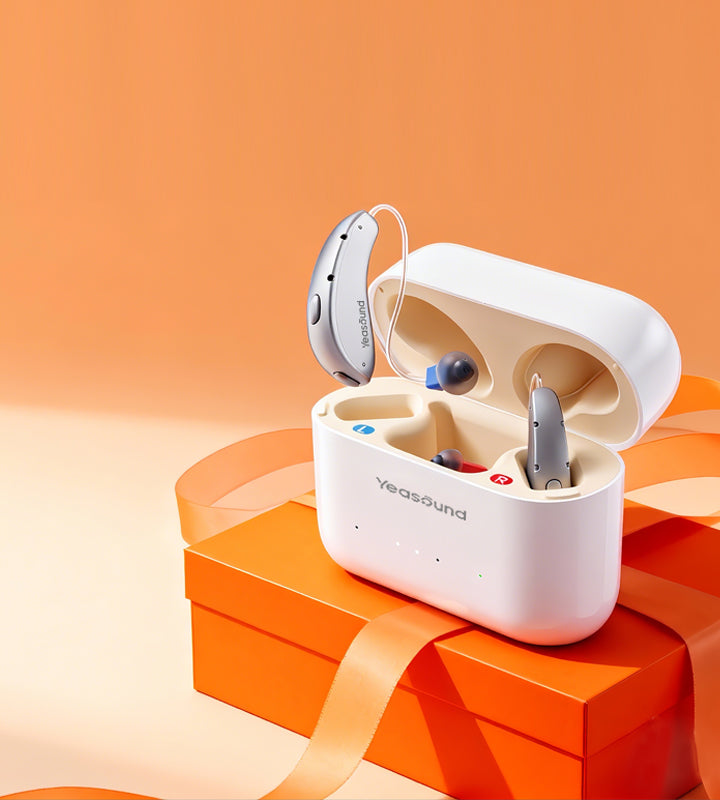
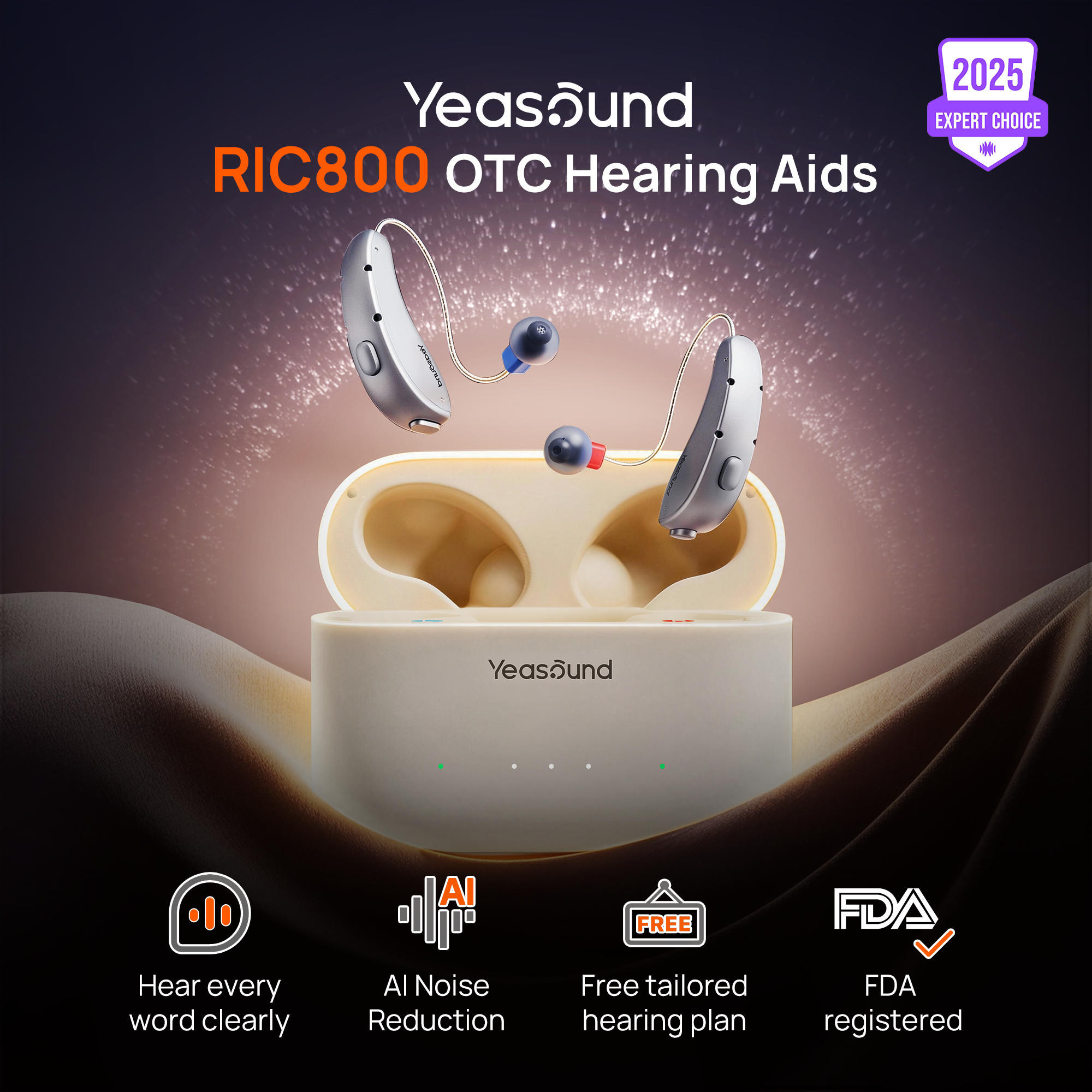
Yeasound RIC800 is not an invisible in-canal hearing aid, so it should not be described that way. It is a discreet receiver-in-canal OTC option to compare if you are open to a small behind-the-ear component in exchange for stronger daily-use features. Its AI noise reduction, auto speech focus, rechargeable design, Bluetooth audio support, and iYeasound app controls may matter more than full invisibility for people who need support across conversations, phone calls, TV, and errands.
|
Design choice |
What it may offer |
What to check before buying |
|
Deep in-canal |
Strong privacy |
Removal, cleaning, comfort, battery life |
|
Small in-ear |
Low visibility and simple wear |
Feedback, occlusion, controls, charging |
|
Discreet RIC |
More room for features and comfort |
Visibility, glasses fit, phone compatibility |
|
App-controlled style |
Easier sound adjustments |
Phone comfort and setup confidence |
|
Rechargeable style |
Less battery handling |
Charger routine and backup plan |
Use the table as a reality check. If your hands are not steady, a tiny device may be stressful. If you wear glasses, a RIC device needs a comfort check. If you hate phone settings, app controls may not feel like an upgrade. If you take many calls, check device compatibility before you buy.
Run a 30-Day Discretion Test
Do not decide after wearing the device alone in a quiet room.
A good trial should include the moments that made you want invisible hearing aids in the first place. Wear them during a grocery checkout, a family meal, a walk with a friend, a phone call, and one situation where you care about appearance. Notice two things separately: whether you hear better and whether you feel comfortable being seen with the device.
The privacy test is personal. Some people discover that a nearly invisible device is worth a few compromises. Others realize that once the device is small and tidy, nobody comments anyway, and better performance matters more. A 100-day trial or clear returns policy can make that discovery less risky because you are not forcing a decision from one afternoon.
If you are not sure whether your hearing difficulty is mild, start with a free online hearing test as a quick screening step. This is a web-based test, not an app hearing test. Use the result as a conversation starter or shopping reference, not as a medical diagnosis.
When Small Is the Wrong Priority
Invisible hearing aids are not the best first filter when symptoms are unclear.
Choose health and function before appearance if hearing changed quickly, sound is distorted, one ear is very different, or daily communication is becoming severe. Also be careful if a tiny device feels uncomfortable, blocks your ear too much, whistles often, or is hard to clean. A hearing aid that stays in a drawer is not discreet. It is unused.
If you want a low-profile option but still need help with setup, care, pairing, or accessories, the Yeasound Support Center can be a more useful next click than another product photo. Support, return policy, and daily handling often decide long-term satisfaction more than the smallest possible shell.
FAQ
Are invisible OTC hearing aids truly invisible?
Not always. Ear shape, hairstyle, device color, fit, and viewing angle all matter. Many products described as invisible are better understood as very discreet. That may still be enough if your main concern is avoiding obvious attention.
What is the biggest downside of tiny hearing aids?
Handling is often the biggest downside. Very small devices can be harder to insert, remove, clean, charge, and adjust. They may also have less room for battery capacity, microphones, Bluetooth features, or easy physical controls.
Should I choose invisible or receiver-in-canal hearing aids?
Choose invisible if privacy is your top barrier and the device is easy for you to handle. Consider receiver-in-canal if comfort, battery life, Bluetooth, app controls, or stronger speech support matter more in daily life.
Can I use an app to test my hearing before buying?
Yeasound's app is for hearing aid control and support features, not hearing testing. If you want a quick starting point, use the web-based Yeasound online hearing test and seek professional care for sudden, one-sided, painful, or medically unclear symptoms.
When should I avoid OTC invisible hearing aids?
Avoid self-treating if hearing changed suddenly, one ear is much worse, symptoms are severe, or you have dizziness, pain, pressure, or drainage. In those cases, appearance should wait until the medical side is clearer.



Share:
Stay Updated
Get the latest hearing tips & news delivered to your inbox.