




The phrase "AI hearing aid" can make a normal buyer suspicious. Fair enough. But ai vs traditional hearing processing becomes more interesting when you stop thinking about the label and start thinking about the room: a sink running, someone speaking from the hallway, a grocery cart rattling past, then a quiet sentence you actually wanted to hear.

The decision is not about chasing a fashionable word. It is about whether the hearing aid can keep speech comfortable when the listening environment refuses to stay simple.
What Traditional Processing Does Well
Traditional digital processing follows programmed rules. It can shape loudness, manage feedback, and support certain frequency ranges. For quiet conversations and predictable rooms, that can feel stable and natural. Some users prefer that. They do not want the sound changing every time the room changes.
A steady processing style can be especially helpful for someone with a regular routine: breakfast with one person, a quiet office, television at a consistent volume, or short errands in familiar stores. Traditional processing also gives some users a sense of control. They learn the volume or mode that works, then repeat it.
Where Traditional Processing Can Struggle
The weakness shows up in messy places. A cafe is not one noise. It is cups, chairs, music, espresso, and three voices at the next table. A family dinner is not one voice. It is laughter, plates, a child moving around, and someone talking from the far end of the table. Traditional processing may help, but it may not separate speech from the mess as flexibly.
That does not make traditional processing bad. It means the user should test it in the places that usually cause fatigue. If the person only tests a device in a quiet room, nearly everything can sound acceptable. The real comparison begins when the room changes faster than the user can adjust settings.
What AI Processing Tries to Do
AI processing is meant to read the sound scene and make better guesses about what deserves attention. That can mean stronger speech focus, more adaptive noise handling, or fewer manual setting changes.
Still, AI is not magic. It cannot make a packed restaurant quiet or turn a mumbled sentence across the room into perfect speech. What it may do is reduce some competing noise, keep speech more forward, or make transitions between listening scenes feel less tiring.
Automatic Changes Can Help or Annoy
The best automatic processing feels invisible. You move from a quiet hallway into a grocery store, and the device adjusts without making you think about it. The worst automatic processing calls attention to itself. Sounds shift too obviously. A voice suddenly feels sharp. The user starts wondering what the hearing aid is doing instead of listening.
That is why comfort belongs in the comparison. AI processing should not only be judged by whether it reduces noise. It should be judged by whether the user can wear it for hours without feeling tense. Some people prefer a little less processing because it feels more natural. Others prefer stronger speech focus because it lowers listening effort.
Try It With Annoying Sounds
Do not test AI processing only in a quiet room. Try a grocery store, a car ride as the passenger, a kitchen while water is running, and one family conversation where people interrupt each other. Notice whether you are less tired, not just whether sound is louder.

For a fair comparison, use the same situations for both approaches. Ten minutes in a store. A conversation near running water. A TV scene with background music. A phone call while someone else is in the room. Write down what felt easier and what felt artificial.
Yeasound Fit for AI Processing
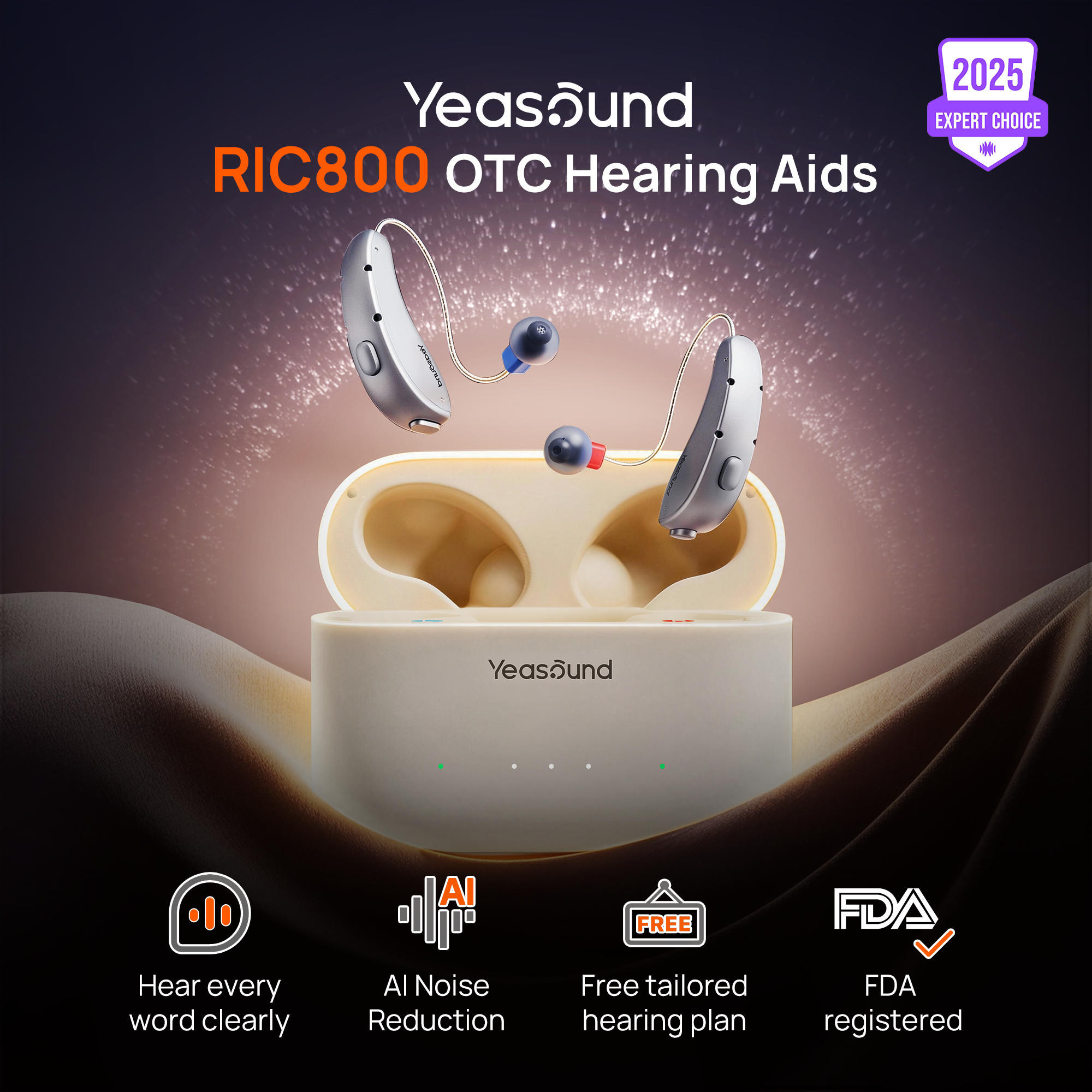
Yeasound RIC800 may be worth comparing if you want AI noise reduction, auto speech focus, Bluetooth support, rechargeable use, and iYeasound app controls. If you need a first hearing check, use the web-based Yeasound hearing test. The app is for controls and resources, not hearing testing.
If setup becomes the problem, use the Support Center before blaming your ears or the device. Sometimes one dome, receiver fit, or setting makes the test fairer. A device with good processing still needs a reasonable fit and a patient setup period.
A 30-Day Comparison Mindset
A single test can be misleading. One noisy restaurant may be unusually bad. One quiet afternoon may be too easy. A 30-day comparison gives the user time to notice patterns: where speech improves, where fatigue changes, where sound becomes annoying, and whether automatic adjustments feel helpful.
Choose four places: a quiet living room, a kitchen with water running, a store aisle, and a family table. The quiet room shows whether sound feels natural. The kitchen shows whether background noise becomes tiring. The store aisle tests shifting noise. The family table shows whether overlapping voices become easier or harsher.
How to Judge the Result
Do not ask only whether AI sounds more advanced. Ask whether you interrupted people less. Ask whether you left the store less tired. Ask whether the device handled a changing room without constant manual changes. Ask whether sound still felt like your own life instead of a demonstration. The better choice is the one that lowers effort without making the device feel like another job.
FAQ
Is AI hearing processing always better?
No. AI-style processing can help in changing noise, but some people prefer the steadier feel of traditional processing. The better choice depends on comfort, routine, and how often the user faces complex sound scenes.
What does AI noise reduction do?
It may reduce some competing background sound and support speech focus. It should not be expected to remove all noise or make a busy restaurant quiet. Test it where listening usually feels tiring.
Are traditional hearing aids outdated?
No. Traditional processing can still work well for quiet conversations, predictable routines, and users who prefer fewer automatic changes. A stable device that gets worn daily can be a very good choice.
How should I compare AI and traditional processing?
Use real places: a store, a kitchen, a car, a family room, and a noisy meal. Track fatigue and comfort as well as word understanding. The winner makes listening easier without making sound feel strange.
Can AI hearing aids diagnose hearing loss?
No. Hearing aids and apps are not diagnosis tools. Use a web-based screening or professional evaluation when needed, especially if symptoms are sudden, one-sided, severe, painful, or medically unclear.



Share:
Stay Updated
Get the latest hearing tips & news delivered to your inbox.