




The clue may be surprisingly ordinary: you move a phone call from your right ear to your left and the voice seems to drop away. Or you always choose the same side of the table without thinking about it. Searching for hearing aids for one ear hearing loss is understandable, but the first decision is not which model to buy. It is whether the difference is recent, medically unexplained, and likely to benefit from ordinary amplification. Try the free hearing test if you want a private first check. Treat a left-right gap as a reason to book a proper evaluation, though, not as an online diagnosis.
When only one ear changes, it is worth slowing down before shopping. Two people can both say "my left ear is worse" and mean very different things. One may have a plug of wax; the other may hear tones on that side but struggle to recognize words. Those are not interchangeable problems. Buying one OTC aid first may simply postpone the appointment that explains which problem you have.

First, Decide Whether This Is Urgent
Think back to timing. Did Friday feel normal, but by Sunday the phone sounded faint in one ear? Skip the product tabs and call for medical care. Sudden sensorineural hearing loss often arrives on one side, and the NIDCD guidance on sudden deafness treats that timing as an emergency. A rapidly deepening loss, fullness, dizziness, or tinnitus makes the call more pressing.
Pain, drainage, blood, a recent blow to the head, or the feeling that something is lodged in the canal also changes the plan: have the ear examined. ASHA's OTC hearing aid FAQ includes hearing loss or tinnitus mainly on one side among the signs that call for a medical provider. Most people who notice an uneven result will not have an emergency. The sensible order is still explanation first, amplification second.
"One Ear Hearing Loss" Is Not One Diagnosis
A slight gap that has been on several old tests is a different story from an ear that stopped making sense of speech last week. Some people do have a steady mild-to-moderate loss on one side while the other remains near normal. What matters next is the word score. When the poorer side still understands speech once it is made audible, an ordinary hearing aid may be useful.
Others have hearing loss in both ears, but one ear is worse. They may benefit from two differently programmed devices because both ears still contribute. At the far end, one ear may have little usable speech understanding even when sound is made louder. A standard hearing aid on that side may produce more sound without enough clarity. That is when a clinician may discuss systems such as CROS, which sends sound from the poorer side to the better ear, or other specialist options.
Read Test Results Ear By Ear
A useful report contains more than the familiar red and blue lines. The plotted marks record how soft a tone could be before each ear missed it, pitch by pitch. Air and bone symbols are compared to look for a problem in the sound pathway. Then the word test adds something the graph cannot: once a voice is audible, how much does that ear actually understand?
|
Finding to discuss |
Why it matters |
Possible next conversation |
|
Mild-to-moderate thresholds with useful speech scores in one ear |
Amplification may provide meaningful clarity |
Conventional hearing aid and verification |
|
Loss in both ears, one side worse |
Both ears may still contribute differently |
Two aids with ear-specific fitting |
|
Very poor speech understanding in the poorer ear |
More volume may not restore useful detail |
CROS/BiCROS or specialist options |
|
Air-bone difference or visible blockage |
The issue may involve outer or middle ear |
Medical or audiology treatment first |
|
Sudden or fluctuating asymmetry |
Timing may affect medical management |
Prompt professional assessment |
Do not use this table to diagnose yourself. Use it to ask better questions. "Is the poorer ear aidable?" and "How are the speech scores different?" are more useful than "Can I just buy one hearing aid?"
When One Conventional Hearing Aid Can Make Sense
One hearing aid can be a reasonable trial when the tests show a stable loss on one side and useful word understanding remains there. The fitting should be judged in the places where that ear lets you down, not only in a quiet office. Comfort and tolerance for louder sound matter too. Even a successful fitting will not necessarily bring back natural two-ear localization.
Test with the speaker on the poorer side, not directly in front. Try a quiet conversation, then a moderate background-noise setting. Notice whether speech becomes more accessible without the aided side feeling harsh. If the device has directional modes, check whether they help or accidentally reduce a voice arriving from the side you are trying to support.

Why CROS Is A Different Solution
A CROS system is designed for a person whose poorer ear cannot make good use of conventional amplification. A microphone worn on that side transmits sound to a device at the better ear. It can reduce the "head shadow" problem, where the head blocks high-frequency speech arriving from the poorer side.
CROS does not recreate true binaural hearing. Both sides' sound ultimately reaches the better ear, so direction finding may remain difficult. In noise, benefit depends on where the speech and noise are located. BiCROS is related but intended when the better ear also needs amplification. These are fitting decisions best made with an audiologist, not features to infer from a general product page.
Test The Problems That Asymmetry Actually Creates
One-ear hearing loss often shows itself in location and positioning. In a car, a driver may miss a passenger on the poorer side. At a rectangular table, changing seats can transform the conversation. Outdoors, it may be harder to identify where a bike bell or call came from. At work, a colleague speaking while walking on the weaker side may seem unusually soft.
Build a test around those moments. Ask the same person to speak from the better side and poorer side at a similar distance. In a safe setting, turn away and identify the direction of a sound. Write down whether amplification improves access, causes distraction, or leaves the problem unchanged. These observations help a clinician or support team understand the goal.
Where An OTC Yeasound Device May Fit
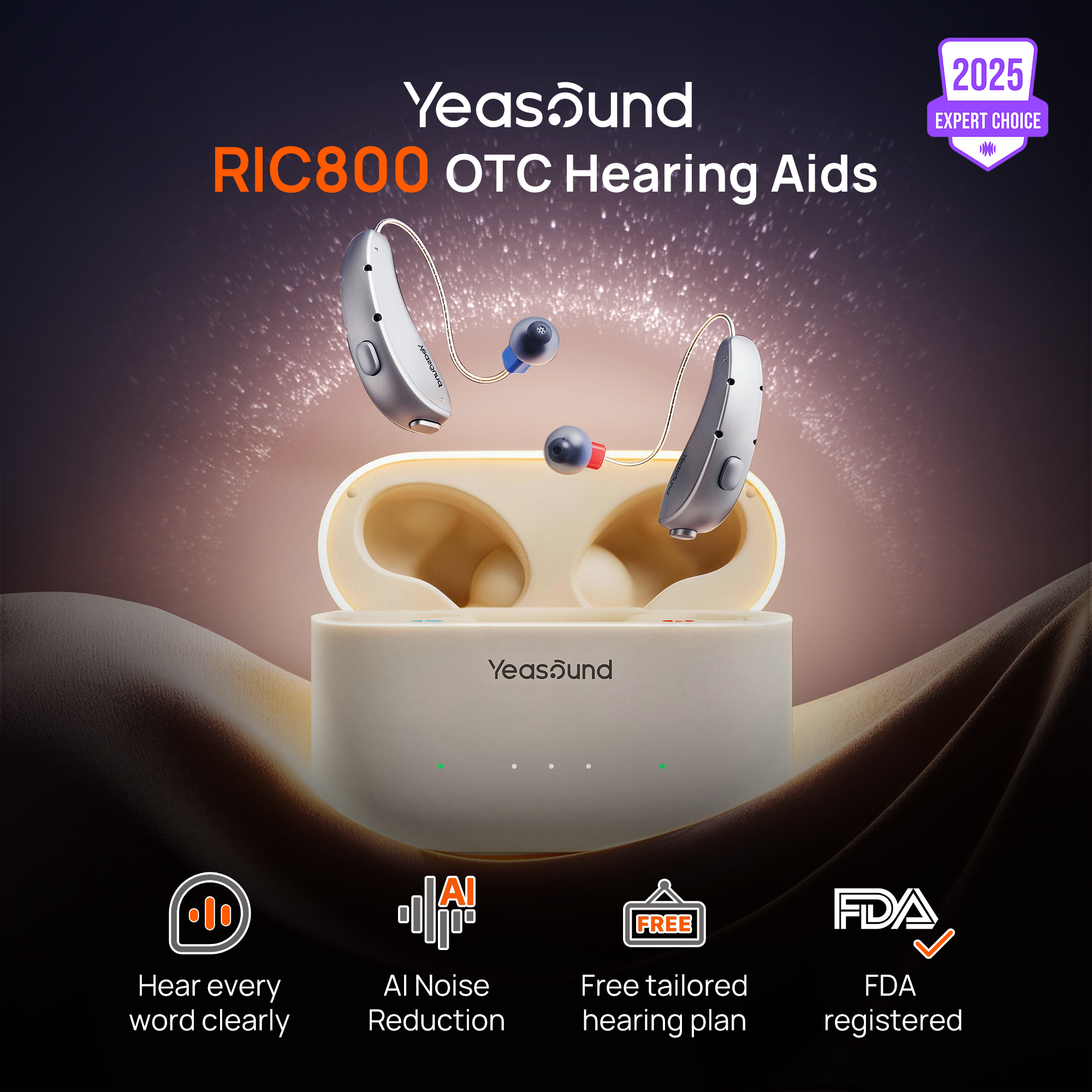
An OTC device should enter the discussion only after the poorer ear is confirmed to have a stable, perceived mild-to-moderate loss appropriate for self-managed amplification. In that narrower situation, a discreet RIC model such as Yeasound RIC800 may be considered for speech-focused processing, rechargeable use, and app-based adjustments. It should not be presented as a solution for sudden loss, medically unexplained asymmetry, or an ear with little usable speech understanding.
If a professional suggests a conventional aid, ask what improvement is realistic in noise and whether locating sound will still be difficult. Remote fine-tuning support may help with comfort or everyday sound. Go back to the audiologist, rather than continuing remote adjustments, if the aided ear provides little benefit or the asymmetry changes. Device support and medical assessment solve different problems.
So, do you need one hearing aid? Perhaps. You may instead need two differently programmed aids or a CROS-type system. The answer sits in the ear-by-ear thresholds and word scores, not in the fact that one side happens to feel weaker.
What I Would Ask At The Appointment
Bring the report and ask the clinician to talk through each ear separately. Is the gap conductive, sensorineural, or mixed? Has it been stable? Most important, does the poorer ear still understand words well enough to use amplification? Name the situation you care about, perhaps the passenger seat or a crowded dinner, and ask how improvement there would be measured.
When the recommendation is an aid, find out how the clinician will verify output on that side and put the follow-up date on the calendar. An uneven fitting can feel odd at the start. That is a reason for careful adjustment, not a reason to keep turning the volume up on your own.
FAQ
Can I wear a hearing aid in only one ear?
Yes, a single hearing aid can make sense when one ear has stable, aidable hearing loss and the other ear does not need amplification. The poorer ear should still have enough speech understanding to benefit from louder, processed sound. An audiologist can verify whether one device is appropriate and set realistic expectations.
What is the difference between a hearing aid and CROS?
A conventional hearing aid amplifies sound for the ear wearing it. A CROS microphone sends sound from an unaidable ear to the better ear instead. CROS can improve access to voices on the poorer side, but it does not restore normal two-ear localization.
Is sudden hearing loss in one ear an emergency?
Sudden sensorineural hearing loss should receive prompt medical attention, particularly when it develops over hours or a few days. Fullness, dizziness, or tinnitus may occur with it. Do not wait for an OTC hearing aid trial before seeking care.
Will one hearing aid fix sound direction?
It may improve awareness on the aided side, but natural localization depends on the brain comparing input from both ears. A single conventional aid or CROS system may not fully restore that comparison. Test safety-relevant situations and discuss remaining difficulty with a hearing professional.
Can an online hearing test tell me why one ear is worse?
No. An online screening can suggest that the ears respond differently, but headphones, room noise, device calibration, and the test format limit what it can show. A professional evaluation is the appropriate next step for persistent or significant asymmetry.


Share:
Stay Updated
Get the latest hearing tips & news delivered to your inbox.