



If you struggle to follow conversations amid restaurant clatter, subway rumbles and bustling gatherings, you’ve likely asked: do noise‑cancelling and noise reducing hearing aids actually work in 2026? The concise answer is yes — but with clear limitations. Modern 2026 noise reducing hearing aids can drastically cut listening fatigue and boost speech clarity in noisy environments, yet they cannot deliver perfect silence or eliminate all background chaos. Most user disappointment stems from unrealistic marketing expectations of noise cancelling performance, not faulty noise‑reduction technology.
In this in‑depth guide, we combine clinical research, audiologist expertise and real‑user experience to break down the core difference between ANR noise‑reduction technology for hearing aids and well‑known headphone ANC noise cancelling technology. We will walk you through three key metrics to judge real‑world performance of noise cancelling hearing aids, debunk common noise cancelling myths, and share practical usage tips to help you make an informed purchase decision for high‑quality noise reducing hearing aids.

ANR vs ANC: Core Definitions & Key Differences for Noise Reduction
Many consumers confuse headphone ANC noise cancelling with hearing aid noise‑reduction technology. In fact, nearly all commercial headphones adopt ANC (Active Noise Cancellation), while professional modern hearing aids rely on optimized ANR (AI Noise Reduction). The two technologies are built for completely different goals, and mixing them up creates unrealistic expectations for noise cancelling hearing aids and noise‑reduction performance.
What Is ANC (Active Noise Cancellation)?
ANC (Active Noise Cancellation) widely used in headphones generates inverted anti‑sound waves to neutralize incoming sound. Its core goal is to cancel out as much external sound as possible, regardless of whether that sound is noise or human voice. Headphones prioritize quiet isolation via full noise cancelling, and do not need to preserve surrounding alert sounds for safety.
What Is ANR (AI Noise Reduction)?
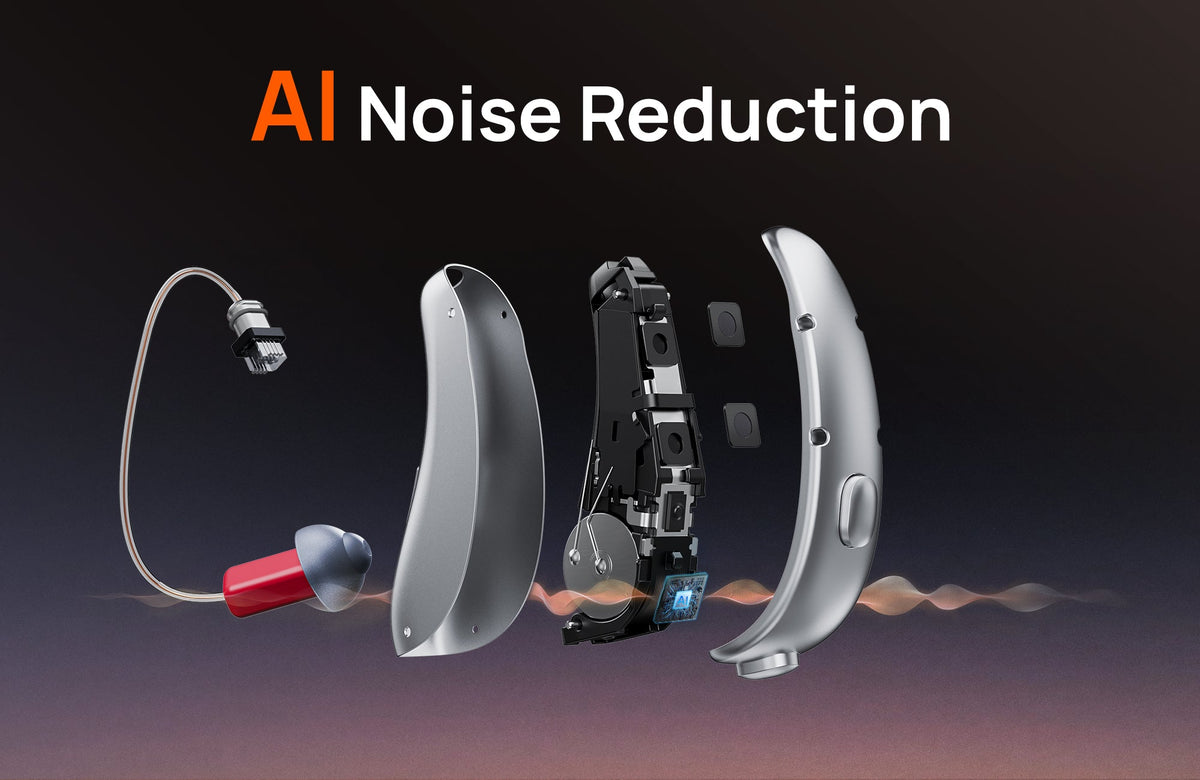
noise reducing hearing aids adopt professional ANR technology. Instead of wiping out all incoming sound like ANC noise cancelling systems, ANR’s core design principle is: suppress unwanted background noise while preserving human speech and critical environmental sounds. Multiple microphones capture ambient audio, onboard chips analyze audio signals in real‑time, identify noise versus human voice, then suppress disruptive noise while keeping conversation voices intact. Different hearing‑aid brands implement ANR noise‑reduction with different algorithm paths, but the core objective stays consistent: protect speech intelligibility instead of pursuing total sound isolation like traditional ANC noise cancelling devices.
Critical Functional Differences Between ANR and ANC
The biggest distinction lies in design purpose. ANC aims to block external sound entirely through full noise cancelling. ANR focuses on intelligent noise‑reduction, filtering noise while keeping voices and safety alerts audible. This fundamental difference explains why you cannot judge noise cancelling hearing aids performance using headphone ANC noise cancelling standards.
|
Item |
ANC (Noise Cancellation) |
ANR (AI Noise Reduction) |
|---|---|---|
|
Core Technology |
Active Noise Cancellation (ANC), generates counter‑sound waves |
AI Noise Reduction (ANR), intelligent signal identification & suppression |
|
Core Goal |
Block external sound as much as possible, isolate user from surroundings via full noise cancelling |
Precision noise‑reduction, suppress background noise, retain human speech and safety warning sounds |
|
Sound handling logic |
Cancels all incoming sound, noise and voices alike |
Differentiate noise vs speech; suppress noise via targeted noise‑reduction, keep speech |
|
Typical Use-Case |
Music listening, personal quiet space |
Daily conversations, restaurant dining, commuting, social interaction with smart noise‑reduction |
|
Limitation |
May mask important surrounding alert sounds due to full noise cancelling |
Cannot create complete silence in heavily chaotic environments with pure noise‑reduction |
Three Key Metrics To Evaluate Noise Reduction
1. Noise‑Suppression Decibel (dB)
This number tells you how much background noise the device can suppress via noise‑reduction technology. Higher dB value means stronger noise‑suppression capability. However, higher is not always better. Over‑aggressive noise‑reduction may compress and muffle human speech, hurting conversation clarity. Good ANR strikes a balanced suppression strength instead of chasing the largest dB number blindly, unlike one‑size‑fits‑all ANC noise cancelling.
2. Real‑World Wearing & Listening Experience
Lab numbers are meaningless without good real‑world noise‑reduction performance. The core practical test: when surrounding noise goes down via smart noise‑reduction, can you still hear conversation voices naturally? Great ANR noise‑reduction technology lowers disruptive ambient noise, without making human voices sound dull, compressed or distant. This is the most direct feeling end‑users perceive day‑to‑day, far more practical than theoretical ANC noise cancelling data.
3. Signal‑to‑Noise Ratio (SNR)
Signal‑to‑noise ratio measures how much louder speech signal is compared against background noise. The higher the SNR value, the better noise‑reduction performance. A high SNR means speech stands out clearly above surrounding chaos, which directly reduces listening effort and mental fatigue during conversations in noisy rooms. As a key industry benchmark, higher SNR delivers more comfortable speech‑in‑noise performance for OTC noise reducing hearing aids.
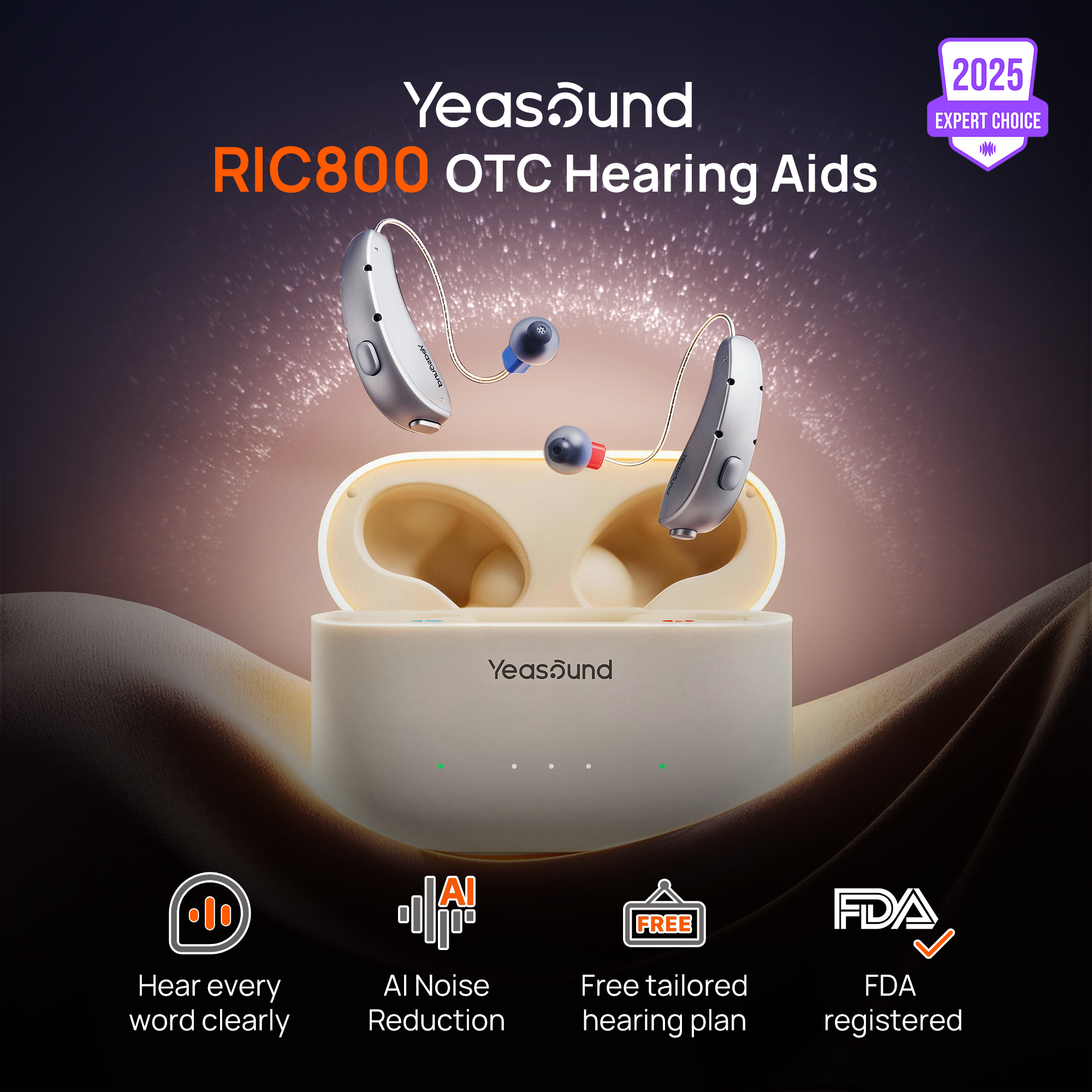
Yeasound optimizes its AI‑driven ANR noise‑reduction system across all three dimensions. Our algorithm carefully tunes noise‑suppression strength to avoid over‑suppressing human voice, maintains natural wearing experience, and delivers SNR improvement far above the industry average for users in noisy daily scenarios. The flagship Yeasound RIC800 brings outstanding real‑world performance comparable to premium $3,000+ prescription hearing aids, making it a standout option in the consumer noise cancelling hearing aids market. Learn more about our core acoustic optimization and noise‑reduction technology via our official page: Yeasound Sound Technology.

Real‑Life Scenarios to Evaluate Hearing aids Noise Reduction
Based on audiology clinical data and user feedback, hearing aids equipped with mature ANR noise‑reduction technology deliver targeted noise‑reduction improvements in different daily scenarios, solving core hearing pain points pertinently that basic noise cancelling devices cannot address.
Steady Low‑Frequency Noise: Commute & Mechanical Hum
Mature ANR noise‑reduction handles continuous low‑frequency noise such as bus rumble, subway vibration and air‑conditioner hum. It greatly softens these constant background sounds and reduces long‑term auditory fatigue. According to PMC (US National Center for Biotechnology Information) research, well‑tuned ANR noise‑reduction significantly improves signal‑to‑noise ratio (SNR) in steady noisy environments, especially for users with mild to moderate hearing loss, outperforming generic ANC noise cancelling solutions for daily use.
Crowded Social Scenarios: Restaurants & Family Gatherings
noise reducing hearing aids excel in busy dining rooms and family parties. They cannot eliminate all background noise like extreme noise cancelling devices, but ANR algorithms effectively suppress cutlery clatter and distant chatter, highlighting front‑facing conversation voices. This drastically lowers listening effort, letting users participate in social activities without mental exhaustion, a key advantage of intelligent noise‑reduction over rigid ANC noise cancelling.
Outdoor Wind Noise Suppression
Wind‑induced static noise is a long‑standing pain point for hearing aid users. 2026 upgraded ANR noise‑reduction algorithms accurately identify turbulent wind sound features and suppress static interference while retaining normal speech and environmental sounds. This makes outdoor walks, patio dining and open‑air activities far more comfortable, a scenario where traditional noise cancelling ANC technology often fails to perform well.
Authoritative Audiology Opinions
Clinical Research on Speech‑in‑Noise Performance
Peer‑reviewed studies from PMC public library confirm that modern ANR noise‑reduction technology effectively improves speech intelligibility in 70dB+ noisy environments. However, lab test advantages do not fully replicate complex real‑world scenarios, and actual noise‑reduction and noise cancelling user experience varies individually.
Professional Advice From Hearing Health Authorities
Leading institutions including the Hearing Loss Association of America and UCSF EARS Program emphasize that ANR noise reducing hearing aids reduce listening fatigue rather than eliminate noise entirely via blind noise cancelling. Professional customized fitting is far more important than stacked functional specs — even top‑tier noise‑reduction devices perform poorly without personalized tuning.
3 Common Marketing Myths to Avoid
Myth 1: Noise reducing hearing aids deliver total silence via full noise cancelling
ANR noise‑reduction suppresses background clutter but will not eliminate all ambient sound. Its core design goal is to balance speech clarity and environmental awareness, not create a completely quiet closed space like dedicated noise cancelling headphones.
Myth 2: Higher price equals better ANR noise‑reduction and noise cancelling performance
Flagship premium devices have more comprehensive functions, but a well‑fitted mid‑range ANR noise reducing hearing aids often provides better real‑world noise‑reduction effects than poorly adjusted high‑end equipment. Personalized fitting always outweighs pure hardware specs for noise‑reduction and noise cancelling performance.
Myth 3: OTC devices match professionally fitted hearing aids in noise‑reduction and noise cancelling
OTC noise reducing hearing aids only suit mild hearing loss with generic preset modes. For moderate hearing loss, professionally calibrated devices deliver far more accurate ANR noise control and speech enhancement noise‑reduction effects than standard noise cancelling OTC models.
Practical Tips to Maximize Hearing‑Aid ANR Performance
Get Professional Custom Fitting & Fine‑Tuning
Audiologists adjust device parameters based on your exclusive audiogram, optimizing ANR noise‑reduction intensity and speech enhancement effects for your hearing aids. Regular follow‑up fine‑tuning according to your daily usage pain points can greatly improve practical noise‑reduction and noise cancelling experience.
Simple Environmental Habits to Boost Noise‑Reduction Effects
Choose booth seats in restaurants, face your conversation partner, and keep your back to noisy areas. Avoid echoing spaces with bare hard walls — these small habits amplify your hearing aid’s ANR noise‑reduction capability significantly, better than relying solely on passive noise cancelling.
Master Smartphone App Preset Functions
2026 smart hearing aids support one‑click mode switching for scenarios like dining, traffic and outdoors. Manually adjust ANR noise‑reduction intensity for complex environments to make up for the insufficiency of automatic recognition modes, achieving customized noise‑reduction beyond basic noise cancelling functions.
Who Should Prioritize ANR Hearing Aids?
If you frequently commute on public transport, live near busy roads or work in mechanically noisy spaces, high‑quality ANR noise reducing hearing aids relieve long‑term low‑frequency noise fatigue better than generic noise cancelling devices.
If you often dine out, attend family gatherings, work in crowded offices and struggle with mixed human chatter, well‑tuned ANR noise‑reduction will bring more intuitive speech clarity improvements. Mature ANR noise‑reduction functions benefit almost all hearing‑aid users seeking reliable noise cancelling and speech enhancement.
Conclusion
Ultimately, 2026 ANR noise reducing hearing aids do work effectively within reasonable boundaries. They cannot deliver perfect full noise cancelling to eliminate all chaotic background noise, but they excel at targeted noise‑reduction, filtering daily clatter, enhancing speech clarity and reducing long‑term listening fatigue. The gap between marketing hype for noise cancelling and real noise‑reduction experience lies entirely in user expectations and correct device selection.
For anyone tired of straining to converse in noisy daily scenarios, modern ANR noise reducing hearing aids are a life‑changing upgrade. If you’re looking for cost‑effective, high‑performance noise cancelling hearing aids tailored for real‑life noisy scenarios, choose yeasound. Yeasound professional noise reducing hearing aids adopt balanced AI‑powered ANR algorithms, preserving environmental awareness while optimizing speech clarity, bringing comfortable and reliable noise‑reduction and mild noise cancelling hearing experience for daily use.
FAQ
Q1: Can ANR noise‑reduction hearing aids fully eliminate restaurant background noise with noise cancelling?
A: No. ANR noise‑reduction softens restaurant clatter and chatter to reduce listening strain. No 2026 consumer hearing aid can create complete silence in busy restaurants via pure noise cancelling.
Q2: What is the key difference between ANR noise‑reduction and ANC noise cancelling?
A: ANC noise cancelling cancels incoming sound regardless of noise or voice, pursuing full environmental isolation. ANR noise‑reduction suppresses background noise while intentionally preserving human speech and safety alert sounds, built specifically for real‑world daily conversations.
Q3: Do expensive ANR noise‑reduction hearing aids have better noise cancelling performance?
A: Not necessarily. Professional personalized fitting and tuning have a greater impact on real‑world noise‑reduction performance than high‑end hardware alone. A well‑calibrated mid‑range ANR noise reducing hearing aids often outperforms poorly adjusted premium noise cancelling hearing aids.
Q4: Are OTC ANR noise‑reduction hearing aids suitable for moderate hearing loss with reliable noise cancelling?
A: OTC noise reducing hearing aids only fit mild hearing loss with generic modes. Moderate hearing loss requires professionally fitted hearing aids with customized ANR noise‑reduction parameters for stable noise cancelling and speech enhancement effects.
Q5: Will ANR noise‑reduction hearing aids block important warning sounds with noise cancelling?
A: Qualified 2026 ANR noise reducing hearing aids are programmed to preserve critical environmental sounds like car horns and doorbells. Professional fitting ensures noise‑reduction and mild noise cancelling do not affect safety awareness.
References
1. PMC(NIH): Hearing Aid Technology Settings and Speech‑in‑Noise Difficulties
2. UCSF EARS Program: Hearing Aid Features Guide
3. Hearing Loss Association of America: Hearing Assistive Technology



Share:
Stay Updated
Get the latest hearing tips & news delivered to your inbox.