



Most adults do not wake up thinking about audiograms. They notice something smaller first: a name missed at the pharmacy counter, a grandchild's question from the back seat, a soft voice in a medical appointment, or a sentence that disappears when someone turns away.

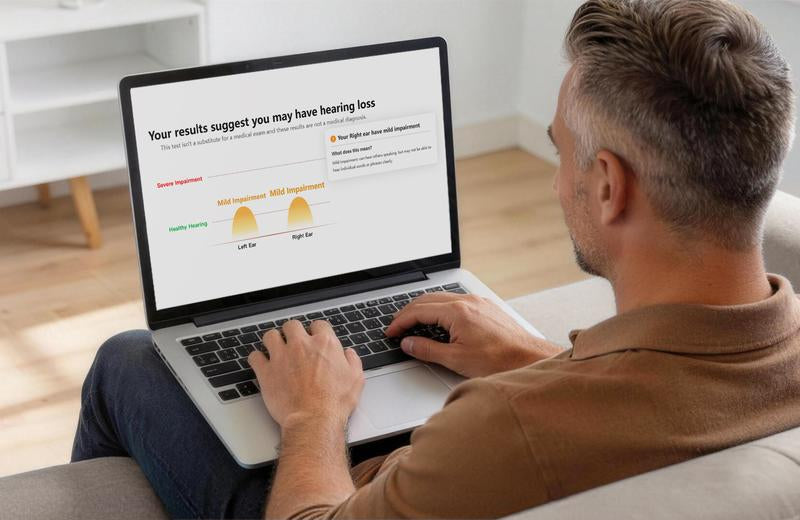
That moment usually leads to a practical next step. You may try a quick online screening, such as the Yeasound hearing test, visit a hearing care clinic, or book a full evaluation with an audiologist or ENT office. Each route can be useful, but the report you receive should be read with the test source in mind.
This article follows the same order a real person usually experiences the problem: first you notice hearing has changed, then you choose a test, then you receive a report, and only then do you decide what the numbers mean for daily life. Read the report in layers instead of jumping straight to a device choice. The most important layers are where the test came from, what the audiogram shows, what speech scores add, and whether any red flags call for professional care.
First, Know Where the Hearing Test Came From
The source of the report affects how much confidence you should place in the numbers.
A full clinical report from a licensed audiologist, ENT office, hospital audiology department, or qualified hearing care clinic is usually the most authoritative. It is more likely to include ear-specific thresholds, speech scores, middle-ear information, and professional notes about whether anything needs medical follow-up.
A workplace screening, online hearing check, or app-based test may still be useful. These results can show whether your hearing pattern roughly matches your daily experience, especially if you are deciding whether to seek a full evaluation. But they should be treated as screening information rather than a complete diagnosis.
Before reading any number, ask three questions:
1. Was each ear tested separately? Ear-specific results are more useful than a general pass/fail result.
2. Was the test done in a quiet, controlled environment? Background noise can affect screening results.
3. Does the result match real life? If the report looks normal but you still struggle often, it may need a second look.
If hearing changed suddenly, one ear is much worse, or you have pain, drainage, dizziness, pressure, or other ear symptoms, do not treat the report as a shopping guide. Start with a professional evaluation.

Next, Read the Audiogram from Frequency to Loudness
An audiogram shows the softest sounds you can hear at different pitches in each ear.
Most hearing test reports include a graph. Frequency, measured in hertz (Hz), runs across the top. Loudness, usually shown as decibel hearing level (dB HL), runs down the side. The marks on the chart show your hearing thresholds, meaning the softest level you responded to at each tested pitch.
This is why the chart can look confusing at first. Softer sounds are near the top. Louder sounds are lower on the chart. If a mark is lower, that sound had to be louder before you heard it.
Frequency shows which speech sounds may be harder to catch
Frequency tells you the pitch range. Low frequencies include deeper sounds. Mid frequencies carry many parts of everyday speech. High frequencies carry speech details, especially consonants such as "s," "f," "th," and "sh."
High-frequency hearing difficulty often feels like this: you can hear that someone is talking, but you miss the exact words. It may show up during family dinners, meetings, stores, or restaurants. You may also notice that captions help even when the TV volume seems loud enough.
If your report shows weaker high-frequency thresholds, compare that pattern with real life. Do soft voices fade? Do similar words blur together? Do you hear better when someone faces you? That match between the chart and daily situations matters more than one isolated number.
For a visual walkthrough, Yeasound's guide on how to read an audiogram can help connect the graph layout with the numbers on your report.
dB HL shows how much louder sound must be for you to detect it
dB HL does not simply mean everyday volume. It is a hearing test scale that shows how loud a tone must be, compared with a reference level, before you detect it.
The National Institute on Deafness and Other Communication Disorders explains that hearing thresholds are measured on a decibel hearing level scale and that pure-tone averages can summarize hearing in each ear. In plain language, higher threshold numbers usually mean you need more sound to detect that pitch.
Many reports group results into normal, mild, moderate, severe, or profound ranges. These labels are helpful, but they are not a full device recommendation by themselves. Two people with a similar average can have different speech scores, different noise problems, and different needs.
Then, Check Speech Scores Before Choosing Support
Pure-tone results show detection. Speech scores show understanding.
That distinction is important because daily hearing trouble is rarely about beeps. It is about names, numbers, soft voices, fast talkers, and conversation mixed with background noise.
Your report may include:
• SRT, or speech reception threshold: the softest level where you can recognize familiar speech items.
• SAT or SDT: the softest level where speech is detected, even if not understood.
• WRS, word recognition score, or speech discrimination: how many words you repeat correctly at a comfortable loudness level.
A strong word recognition score may mean that making speech more audible could help a lot. A lower score may mean amplification can still help, but speech clarity may not improve as much as volume. That is when professional interpretation becomes especially useful.
This is why you should not choose hearing support by average dB level alone. If your tones suggest mild or moderate hearing loss but your speech understanding is unexpectedly poor, ask an audiologist to explain what that means before buying a device.
Watch for Middle-Ear Clues and Red Flags
Some hearing reports include more than an audiogram and speech scores.
You may see terms such as air conduction, bone conduction, tympanometry, acoustic reflexes, or air-bone gap. These data points help professionals understand whether the issue may involve the outer ear, middle ear, inner ear, hearing nerve, or a combination of factors.
Here is the simple version:
• Air conduction tests hearing through the normal pathway of the ear.
• Bone conduction bypasses parts of the outer and middle ear and sends vibration toward the inner ear.
• An air-bone gap can suggest a conductive component, meaning sound is not traveling efficiently through the outer or middle ear.
• Tympanometry checks how the eardrum and middle ear respond to pressure changes.
If your report suggests a conductive issue, a large difference between ears, abnormal middle-ear function, sudden change, pain, drainage, or dizziness, pause before choosing hearing aids. Those patterns deserve professional review.
The practical point is simple: some results are about hearing support, and some are about medical or middle-ear questions. The report helps you tell the difference.
Match the Result Pattern to the Right Next Step
The best next step depends on the pattern of the report and how it shows up in daily life.
Use this table as a decision guide, not a diagnosis:
|
Result pattern on report |
What it may mean in daily life |
Better next step |
|---|---|---|
|
Normal or borderline results, but occasional trouble in noise |
You may need better listening conditions, retesting, or situational support |
Monitor, reduce noise, and consider professional review if daily trouble continues |
|
Mild hearing difficulty, especially in high frequencies |
Soft speech, consonants, TV dialogue, or restaurant conversation may be harder |
Consider OTC hearing aids if you are 18+ and symptoms feel mild-to-moderate |
|
Moderate hearing difficulty |
Daily conversation may require more effort, especially in noise |
OTC may fit some adults, but professional testing and fitting can be valuable |
|
Severe or profound results |
Everyday speech may be hard even with volume |
See an audiologist or ENT; prescription hearing aids or other professional options may be needed |
|
Sudden, one-sided, painful, dizzy, or medically unusual symptoms |
May point to a condition that should be checked |
Seek medical or audiology care before buying a device |
|
Low word recognition score |
Speech understanding may remain difficult even when sound is amplified |
Get professional interpretation and realistic fitting guidance |
|
Air-bone gap or abnormal tympanometry |
Possible conductive or middle-ear issue |
Professional evaluation before device selection |
The FDA describes OTC hearing aids as intended for adults 18 and older with perceived mild-to-moderate hearing loss. That makes OTC a possible path when your report and daily experience both fit that range and there are no red-flag symptoms.
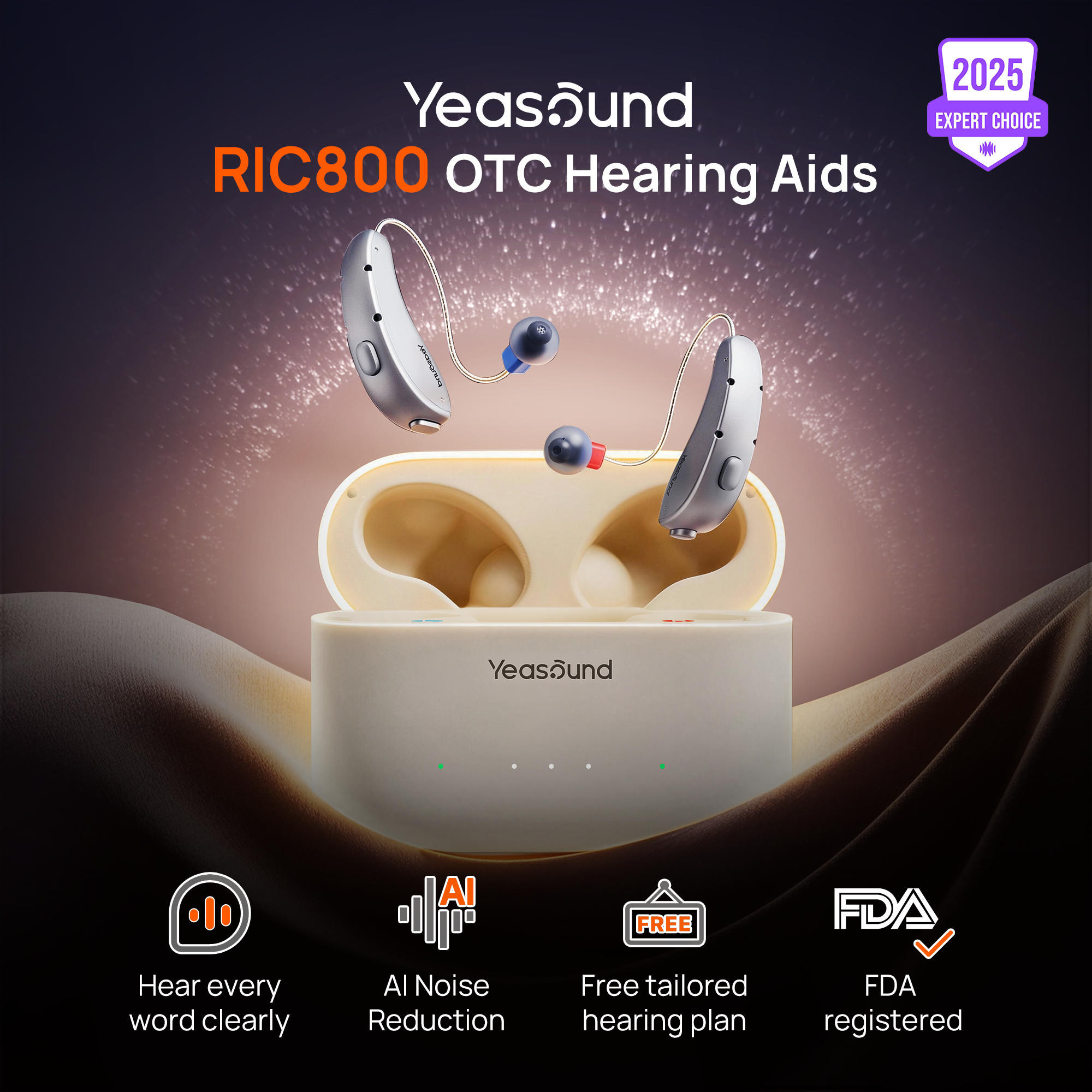
If your main pattern is mild-to-moderate difficulty in daily conversation, Yeasound RIC800 may be worth considering as an OTC option. It is designed for adults with perceived mild-to-moderate hearing loss and supports app-based adjustment, AI noise reduction, auto speech focus, Bluetooth streaming for iOS and Android, up to 31 hours of use on a single charge, and a 100-day return window. Those details matter when you want to test clearer speech in real environments without jumping straight to a higher-cost prescription route.
If your result is severe, sudden, one-sided, medically unclear, or speech scores are unexpectedly poor, choose professional evaluation first.
Use the Report to Build a Practical Trial Plan
A hearing report becomes more useful when you test it against the exact situations that made you seek testing.
After you understand the key data, build a short plan around the pattern you saw:
1. If high frequencies are weaker: test soft voices, TV dialogue, and consonant-heavy speech.
2. If speech scores are the concern: test one-on-one conversation, phone calls, and speech in background noise.
3. If one ear is worse: notice whether you turn your head or prefer one side during conversation.
4. If results are mild-to-moderate: test whether OTC hearing support improves the daily situations that bother you most.
If you are using Yeasound hearing aids, the guide on taking a hearing test at home with the free hearing test can help you understand how in-app testing may support personalization and adjustment.
Give yourself about 30 days of real situations before judging. Try quiet conversation, family meals, TV dialogue, phone calls, and one noisy setting. Track three things: speech clarity, comfort, and listening fatigue.
If the report says mild-to-moderate and the trial improves the exact situations you listed, you have useful evidence. If the trial does not match the report, or if speech still feels unclear even when sound is louder, ask a professional to review the result.
What numbers should I look at first on a hearing test report?
Start with the audiogram thresholds for each ear, especially the frequencies important for speech, then check the degree label if the report provides one. Next, look for speech scores such as SRT and word recognition. These show whether the issue is mainly sound detection, speech understanding, or both.
What does dB HL mean on an audiogram?
dB HL means decibel hearing level. It shows how loud a test tone must be before you can hear it compared with a reference hearing level. Higher dB HL thresholds generally mean the sound had to be louder for you to detect it at that frequency.
What is the difference between pure-tone results and speech recognition scores?
Pure-tone results show the softest tones you can hear at different pitches. Speech recognition scores show how well you understand words when speech is presented at a set loudness level. Both matter because daily hearing is about understanding speech, not only detecting sound.
Are online hearing tests accurate enough to choose hearing aids?
Online or app-based tests can be useful for screening and tracking patterns, but they are not the same as a full clinical evaluation. They may help you decide whether to explore OTC options or seek testing. If symptoms are sudden, one-sided, severe, or medically unclear, choose professional testing.
What hearing test results are suitable for OTC hearing aids?
OTC hearing aids are generally intended for adults 18 and older with perceived mild-to-moderate hearing loss. If your report and daily listening problems fit that range, and you have no red-flag symptoms, OTC may be a reasonable option to compare. Severe, profound, sudden, or asymmetric results need professional care.
When should I see an audiologist or ENT instead of buying a device?
See a professional if hearing changed suddenly, one ear is much worse, you have ear pain, drainage, dizziness, pressure, or the report suggests severe loss, a conductive issue, or unexpectedly poor speech recognition. These patterns need interpretation before device choice.
Can a hearing aid help if my word recognition score is low?
A hearing aid may still improve access to sound, but a low word recognition score can mean speech clarity may not improve as much as volume. This is a good reason to involve an audiologist, set realistic expectations, and consider prescription fitting or other professional strategies.
Do not let hearing test results stay as a confusing chart in a folder. Read the report in the same order a real decision happens: what problem led you to test, where the test came from, what the audiogram shows, what the speech scores add, and whether any red flags need professional care.
If the pattern is mild-to-moderate and matches daily communication trouble, compare OTC hearing aid options and test one in real situations. If the pattern is severe, sudden, one-sided, medically unusual, or hard to interpret, start with a professional evaluation.
The goal is not to decode every symbol perfectly. It is to make the next hearing decision with more confidence and less guessing.



Share:
Stay Updated
Get the latest hearing tips & news delivered to your inbox.