



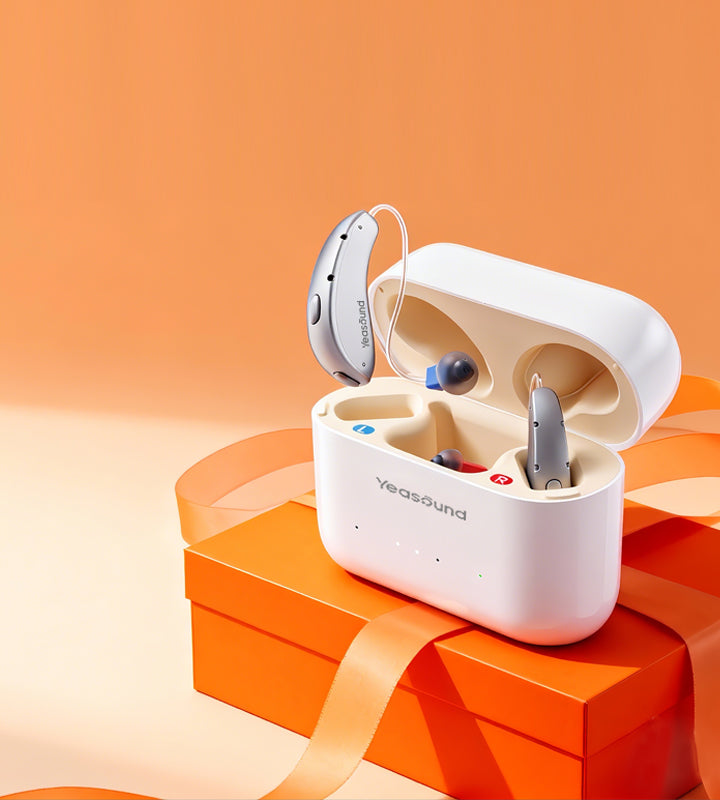

You've decided - or nearly decided - that a hearing aid might be worth trying. But before you spend several hundred dollars on something you'll wear every day, a reasonable question: how do these things actually work? If you're comparing options, start with the broader OTC hearing aids collection so the technology explanation has a practical product context. The real question is not textbook mechanics. It is whether the device can help with the specific situations where you struggle.

That question is harder to answer from a product page. So here's a plain-language explanation of what hearing aids do, how OTC devices differ from prescription ones, and what to expect in the environments that matter to you.
It's Not Just a Volume Knob - Here's What's Actually Happening
The old image of a hearing aid is an earpiece that makes everything louder. Modern digital hearing aids are something different. At the core is a signal processing chip that does more than amplify. It analyzes incoming sound in real time and tries to deliver a cleaner, more intelligible version of what you want to hear.
The basic process: a microphone picks up sounds from your environment. A digital processor analyzes that audio - distinguishing frequencies, identifying speech patterns, reducing unwanted noise. A receiver, a small speaker sitting in or near your ear canal, then delivers the processed sound.
The key word is processed. That processor step is where the intelligence lives, and it is why two hearing aids at very different price points can perform very differently in the same room.
What Digital Processing Actually Does
When you're in a noisy restaurant and someone across the table is speaking, a basic hearing aid makes the restaurant louder and makes the voice louder, roughly equally. An advanced digital processor tries to recognize that the voice in front of you is the signal you want, and reduce the clatter and background conversation that surrounds it. This is closely tied to why SNR matters for clear conversations.
This is called speech enhancement combined with noise reduction, and it works by analyzing the frequency and directionality of incoming sounds several thousand times per second. It is not magic. It does not make a loud restaurant quiet. But it can shift the signal-to-noise ratio enough that following a conversation goes from exhausting to manageable.
How OTC Hearing Aids Work - and Where They Differ from Prescription
Until 2022, getting a hearing aid meant going through an audiologist: a hearing evaluation, a custom programming session, follow-up fittings. That's still the right path for complex cases. But for adults with mild-to-moderate sensorineural hearing loss, the FDA now recognizes OTC hearing aids as a legitimate, self-managed option.
The difference between OTC and prescription isn't primarily in the hardware. It is in how the device gets calibrated to your ears.
| OTC Hearing Aid | Prescription Hearing Aid | |
|---|---|---|
| Fitting | Self-fitting via app or preset programs | Programmed by audiologist to your audiogram |
| Cost | $200-$800/pair | $2,000-$6,000/pair |
| Access | Direct purchase, no prescription | Requires audiology appointment |
| Best for | Mild-to-moderate sensorineural loss | Any degree; especially moderate-to-severe |
| Adjustment | App-based; some offer remote audiologist support | In-clinic follow-up visits |
How Hearing Aids Work in Noisy Environments
Noise is where most people's expectations meet reality, for better or worse.
Here's what the technology does when you walk into a crowded restaurant: directional microphones deprioritize sounds coming from the sides and behind you, focusing on sounds in front. Noise suppression algorithms identify steady-state background noise such as music, HVAC, and crowd hum, then reduce it. For more on this feature, see Directionality in Hearing Aids Explained.
The result is not silence. The background does not disappear. What changes is the relative clarity of the voice you're trying to follow. In a well-designed device, the person across the table becomes easier to hear relative to the surrounding noise, which is the whole problem to solve.
Wind noise deserves a separate mention. It is a specific type of interference that causes a low-frequency rumble in outdoor environments. Dedicated wind noise suppression addresses it separately from general noise reduction, and it matters if you spend time walking, cycling, or in open-air settings.
What Wearing One Actually Feels Like

First-time hearing aid users consistently report the same thing: the first few hours are strange. Sounds you stopped noticing, such as keyboard clicks, your own footsteps, and the refrigerator hum, come back. Speech sounds crisper, sometimes uncomfortably so. The brain needs time to recalibrate what normal sounds like with amplification.
This adjustment period is real, and it typically takes 2-4 weeks, according to the American Academy of Audiology. Most audiologists recommend wearing the device consistently during that time rather than only in difficult situations because the brain adapts faster with full-day exposure.
After adjustment, most users report that the sound profile feels natural and that they stop being conscious of the device itself. The RIC (receiver-in-canal) form factor, a small unit behind the ear connected to the canal by a thin wire, is often comfortable for extended wear.
What hearing aids won't do: restore the hearing you had at 30. They work with the hearing you have now, amplifying and clarifying what the ear can still process. For someone with mild-to-moderate sensorineural loss, that is usually enough to make meaningful daily communication significantly easier.
Is an OTC Hearing Aid Actually Enough?
For mild-to-moderate sensorineural hearing loss, the most common profile in adults between 45 and 70, the honest answer is: often yes, and there is an easy way to find out.
A few practical checkpoints:
· If your primary difficulties are noise environments and high-frequency speech clarity, OTC devices with AI noise processing are built for exactly that profile.
· If you're tech-comfortable enough to use a smartphone app, self-fitting is manageable for most people.
· If you're uncertain about severity, the 100-day trial period most reputable OTC brands offer is the practical test, not a product description or a self-assessment tool.
If your symptoms are still unclear, or you're not sure whether what you're experiencing counts as hearing loss at all, Hearing Loss Symptoms: Normal Aging or a Sign You Should Act Now? is a useful starting point before committing to a device.

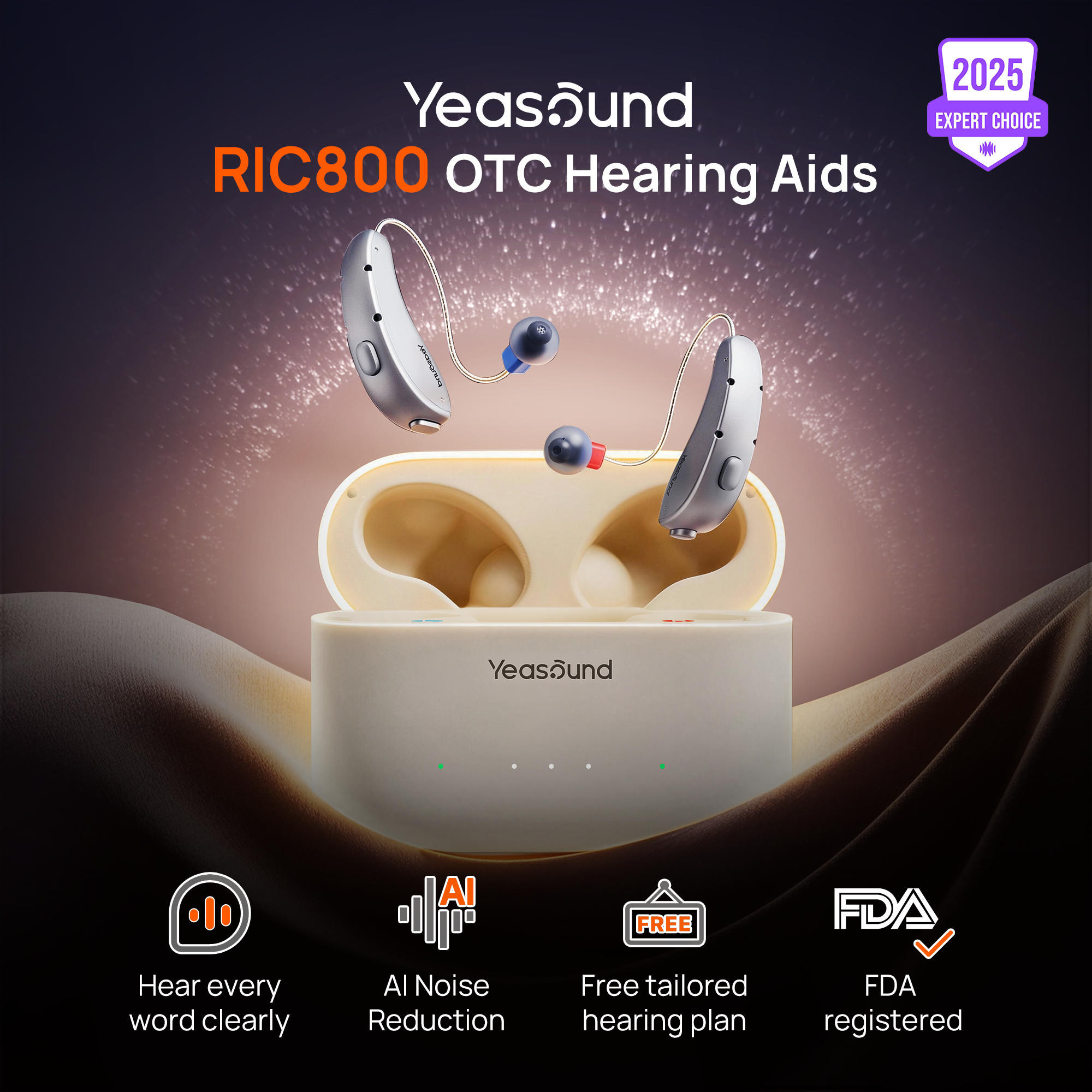
If your daily listening problems are mostly TV, meetings, restaurants, phone calls, and speech in background noise, the Yeasound RIC800 fits naturally into this decision point. It combines a discreet rechargeable RIC design with AI-driven noise suppression, wind and sudden-noise handling, Bluetooth streaming for iOS and Android, IPX8 waterproofing, and 31-hour battery life. Just as important, the 100-day return window and free 1-on-1 remote audiologist session let you test whether those features actually help in your own daily environments before you commit.
That said, for moderate-to-severe loss, unusual audiogram patterns, or one-sided loss, professional evaluation is still the better starting point.
FAQ
How do digital hearing aids work differently from analog ones?
Analog hearing aids amplify all sounds proportionally, so everything gets louder by the same amount. Digital hearing aids convert sound to data and process it with software, allowing selective amplification of specific frequencies, noise reduction, and speech enhancement. Most hearing aids sold today are digital.
Do OTC hearing aids really work as well as prescription ones?
For mild-to-moderate sensorineural hearing loss, well-designed OTC devices with AI processing can support many daily listening needs. The gap becomes more meaningful for severe loss, unusual frequency patterns, one-sided loss, or cases that require precise clinical calibration.
How long does it take to get used to a hearing aid?
Most people need 2-4 weeks to adjust fully, particularly to the return of ambient sounds they had stopped noticing. Consistent daily wear speeds up the adaptation significantly.
Will a hearing aid just make everything louder and more overwhelming?
A basic amplifier might. A modern digital hearing aid with noise reduction should not. It processes sound to prioritize speech while reducing background noise. The first few days can feel intense, but that typically settles as the brain readjusts.
Do I need an audiogram to use an OTC hearing aid?
No. OTC hearing aids do not require a prescription or prior audiogram. Many include an in-app hearing check as part of the setup process. That said, if you have never had your hearing evaluated, knowing your audiogram can help you understand your specific pattern and set more realistic expectations.



Share:
Stay Updated
Get the latest hearing tips & news delivered to your inbox.