



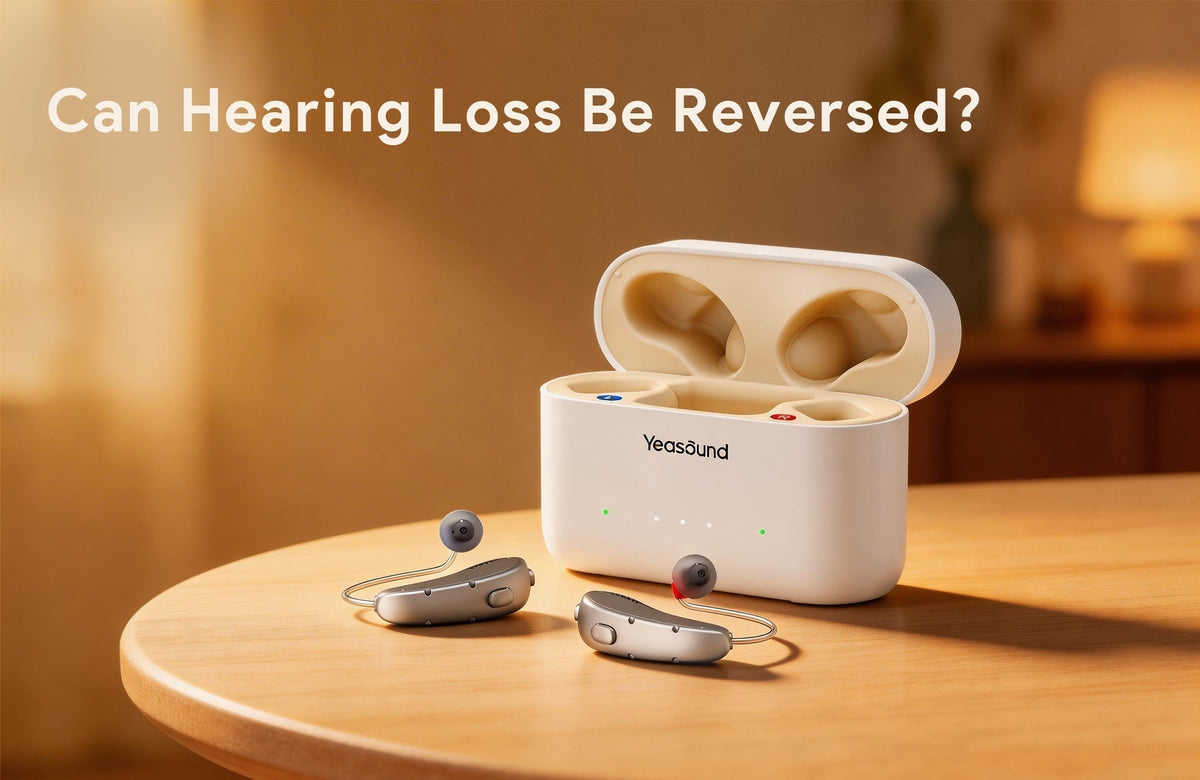
The Truth About Hearing Decline
Many people ask:
"If my hearing is getting worse… can it recover?"
The honest answer:
It depends on the type of hearing loss.
It depends on the type of hearing loss.
Let's break it down in a simple, clear way.

👂 1. Some Types of Hearing Loss Can Improve
This is called conductive hearing loss.
It happens when sound is physically blocked from reaching the inner ear.
Common causes include:
Earwax buildup
Ear infections
Fluid after a cold
Temporary pressure changes (like flying)
In these cases, the inner ear is still healthy — sound just can't travel efficiently.
✅ Once the blockage is treated, hearing often improves or fully returns.
🧠 2. Most Age-Related Hearing Loss Cannot Be Reversed
The most common type of hearing loss in adults is sensorineural hearing loss.
This occurs when:
Tiny sensory hair cells in the inner ear (cochlea) are damaged
Long-term noise exposure affects hearing
Natural aging gradually reduces hearing sensitivity
Unlike many other cells in the body, these hair cells do not regenerate.
That means age-related or noise-induced hearing loss is usually permanent.
While damaged hair cells cannot currently be restored, hearing function can be significantly improved with appropriate treatment and technology.
🔎 Why Does Speech Become Hard to Understand?
Many people say:
"I can hear people talking… I just can't understand them."
This is extremely common.
Hearing loss often affects:
High-frequency speech sounds
Consonants like S, F, T, and K
Speech clarity before overall loudness
That's why turning up the TV doesn't always solve the problem.
Hearing loss is not just about volume — it's about speech clarity and sound detail.
⏳ Why Acting Early Matters
Hearing is not just an ear issue — it's also a brain issue.
When hearing declines and goes unsupported:
Listening becomes mentally exhausting
The brain works harder to fill in missing sounds
Speech processing efficiency can decline over time
Research shows that early intervention helps maintain stronger auditory processing.
When hearing is supported early:
✔ Listening effort decreases
✔ Conversations feel more natural
✔ Social confidence improves
✔ Long-term cognitive strain is reduced
✔ Conversations feel more natural
✔ Social confidence improves
✔ Long-term cognitive strain is reduced
Early support protects both your hearing and your brain. To know about the link between hearing loss and dementia, please refer to: link-between-hearing-loss-and-dementia
🎧 If Hearing Can't Be Restored, What Helps?
While damaged hair cells cannot currently be repaired, modern hearing technology can:
Precisely amplify the frequencies you struggle with
Improve speech clarity
Reduce background noise
Stream calls and media directly to your ears
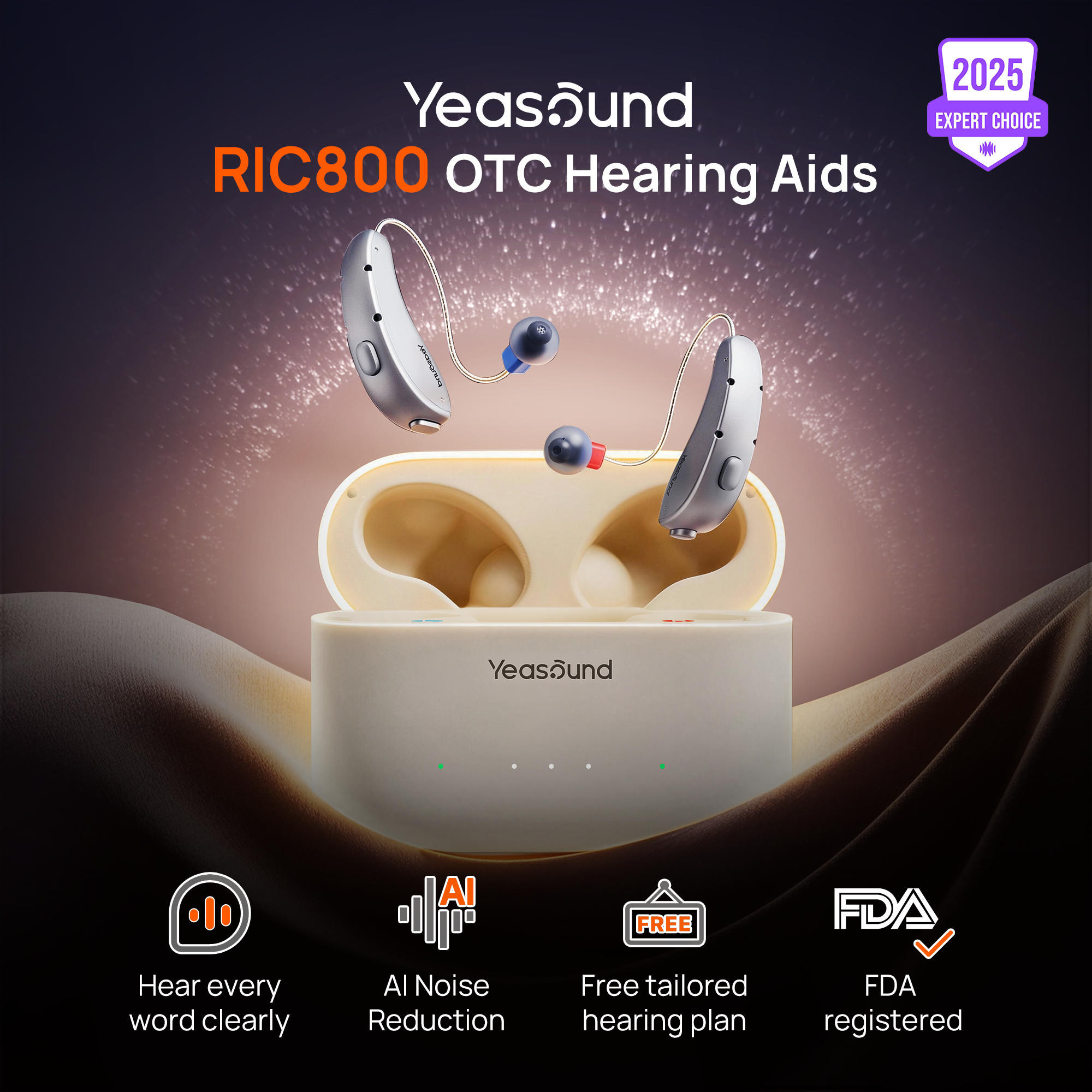
For adults with mild to moderate hearing loss, OTC (Over-the-Counter) hearing aids now provide accessible support — without a prescription.
They are designed to make early intervention easier, more affordable.



Share:
Stay Updated
Get the latest hearing tips & news delivered to your inbox.