



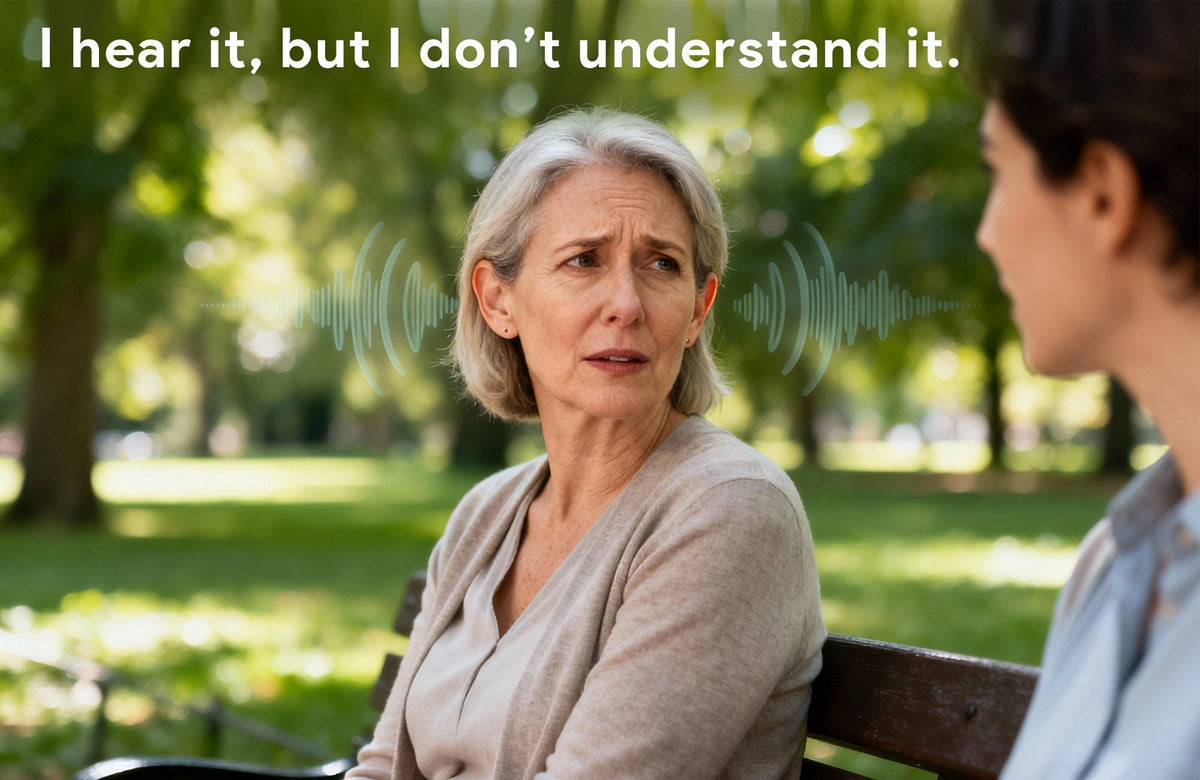
A Common Complaint: "I hear it, but I don't understand it."
For many adults with age-related or early-stage hearing loss, the primary problem isn't loudness.
It's clarity.
It's a conversation.
It's understanding speech in real-life environments — especially when noise is present.
This issue is one of the strongest early signs of speech-in-noise difficulty, hidden hearing loss, or high-frequency hearing loss.

Hearing vs. Understanding — Not the Same Thing
Understanding relies on clarity + contrast + timing + cognitive processing.
Speech contains important high-frequency consonants (s, f, t, sh, th) that deliver meaning.
When these fade, speech sounds "muffled," even if it is loud enough.
Why Volume Isn't the Solution
Turning up voices only boosts vowels (loudness).
It does not restore the missing consonants (clarity).
That's why many people say:
This is also why basic sound amplifiers often fail in busy environments.
Background Noise Exposes Speech-in-Noise Deficits
Restaurants, family gatherings, and cafés create what is known as the cocktail party problem.
Healthy hearing separates talkers and filters noise.
Hearing loss or neural decline makes that separation harder.
Common symptoms include:
- asking for repeats
- mishearing similar words
- withdrawing from conversations
- struggling with fast or overlapping speech
Speech Understanding Lives in the Brain
Ears detect sound.
But the brain decodes speech.
Age, fatigue, cognitive load, and neural processing all influence speech comprehension.
This explains why many people pass a traditional hearing test but still have trouble understanding speech — known as hidden hearing loss.
Why This Matters for Daily Life
Difficulty understanding speech can lead to:
- reduced participation in conversations
- frustration with family members
- avoidance of restaurants and social events
- increased listening fatigue
- loss of confidence
These changes often appear long before someone admits to having hearing loss.
Modern Hearing Solutions Are Clarity-Driven, Not Just Loudness-Driven
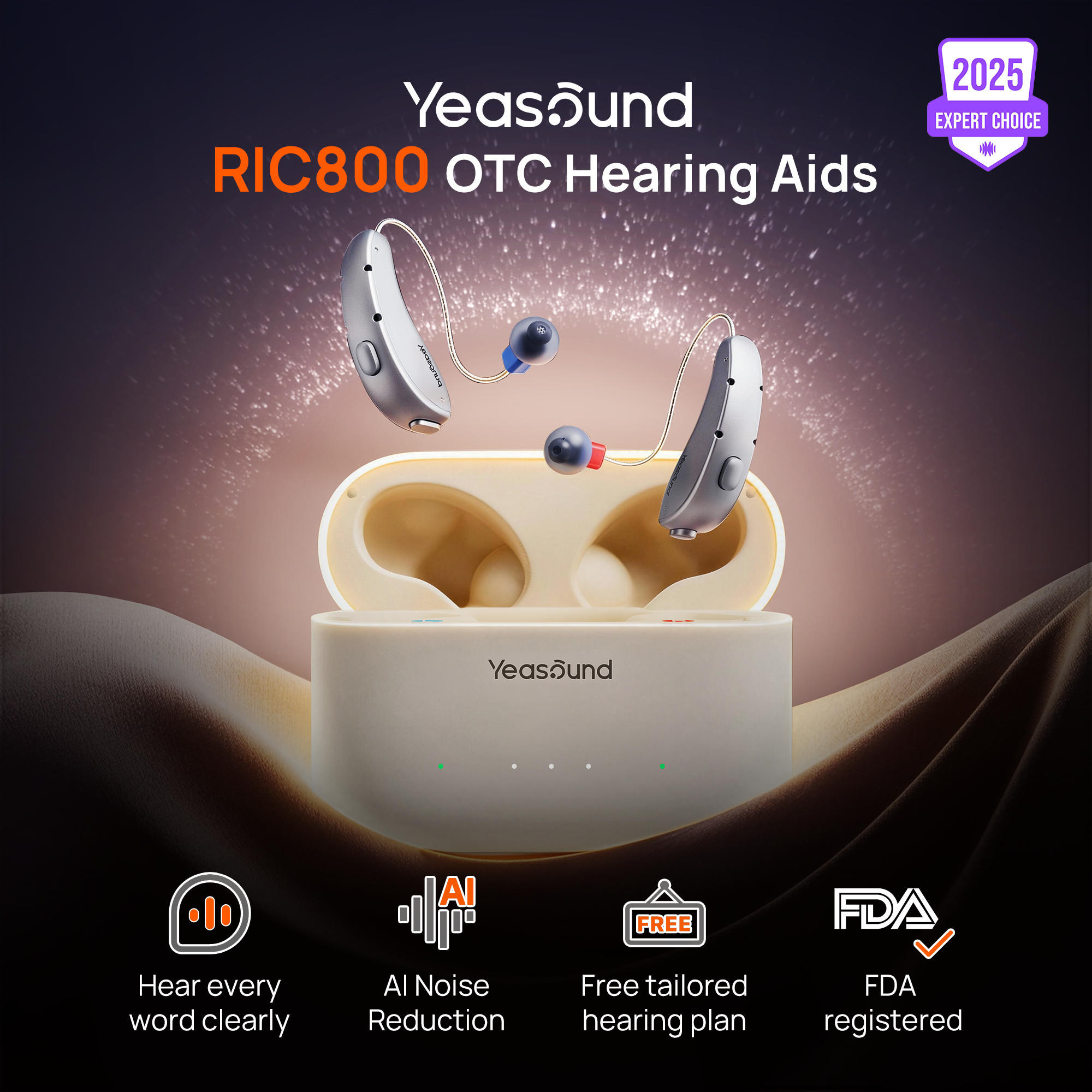
New generations of hearing solutions — including emerging OTC hearing aids — are shifting focus from amplification to enhancement.
Technologies may include:
- directional microphones for speech-in-noise improvement
- digital noise reduction
- AI speech separation
- frequency shaping
- personalized tuning via smartphone apps
These tools aim to improve speech understanding, not just hearing volume.
Key Takeaway
If voices sound loud but unclear, it may indicate clarity-based hearing loss, speech-in-noise difficulty, or hidden hearing loss — conditions commonly linked to aging and noise exposure.
Recognizing this difference early can:
- preserve social participation
- reduce listening strain
- improve communication
- support healthy cognitive aging
Looking Ahead
The future of hearing technology is moving toward speech clarity, noise resilience, and brain-friendly listening, so people can communicate with confidence in the real world — not just in quiet test rooms.
At Yeasound, we believe hearing solutions should empower natural communication, rather than make the world louder. Because communication, confidence, and connection are the foundation of quality of life.
Our mission: Empowering Everyone to Hear the World without Limits.



Share:
Stay Updated
Get the latest hearing tips & news delivered to your inbox.