Last month, a friend told me her father kept saying, “People mumble now.” At home, TV volume rose little by little. At family dinners, he smiled more and spoke less. Nothing dramatic happened in one day. It was a slow pattern.

If you are looking for the best hearing aids for seniors, you may be in the same place: not an emergency, but not comfortable either. The hardest part is not finding options. The hardest part is choosing one path without feeling you might waste money or pick wrong.
This guide is for that exact moment.
When daily conversation feels harder, waiting usually adds friction
You rarely get one big warning sign.
Most hearing changes show up as small daily frictions:
· You ask people to repeat more often
· Group conversations feel tiring
· TV dialogue sounds less clear than music
· Restaurant background noise makes voices blur
A practical question is not “Do I have a formal diagnosis today?”A better question is: Is communication effort affecting my daily life now?
If the answer is yes, early action is often easier than delayed action.
How to choose the best hearing aids for seniors without overcomplicating it
If you’ve searched what are the best hearing aids for seniors, you’ve probably seen dozens of options.
The challenge is not a lack of choice—it’s knowing which one actually fits your daily life.
Use this short decision filter first:
1. Where do you struggle most? (home talk, TV, restaurant, phone)
2. How often does that happen? (occasionally or most days)
3. How much setup help do you want? (self-guided vs clinician-led)
4. What budget range feels realistic for a first trial?
This is enough to narrow choices. You do not need a perfect lifelong answer on day one. You need a practical first fit you can actually use.
OTC vs prescription: the first decision that shapes everything
For many people with mild-to-moderate hearing loss, over-the-counter devices are becoming the first step.
Prescription care is usually better when hearing patterns are complex, rapidly changing, or medically unclear. OTC is often preferred when speed, budget, and home setup matter.
| Decision Point | OTC Hearing Aids | Prescription Hearing Aids | What It Means in Daily Life |
|---|---|---|---|
| Start speed | Faster to begin at home | Slower clinic pathway | OTC reduces delay; prescription adds structure |
| Setup style | Self-fit with app/device controls | Professional testing and fitting | Independence vs guided certainty |
| Cost profile | Usually lower entry cost | Usually higher upfront cost | Budget affects whether people act now or postpone |
| Best fit cases | Many mild-to-moderate situations | Complex or unclear needs | Complexity benefits from expert support |
| Follow-up | Self-adjust over time | Ongoing clinic fine-tuning | Choose based on support preference |
Safety note: if hearing changes are sudden, strongly one-sided, or quickly worsening, seek a professional hearing evaluation first.
What matters most in real life (not just on a spec sheet)
Daily usability matters more than long feature lists.
Most seniors do better when they prioritize:
· Speech clarity in common environments (family table, TV, stores)
· Comfort for long wear (if it is uncomfortable, usage drops)
· Simple controls (volume and mode changes without stress)
· A charging routine that fits daily habits
Fancy features are useful only if they improve your real listening routine.
One practical recommendation for this use case

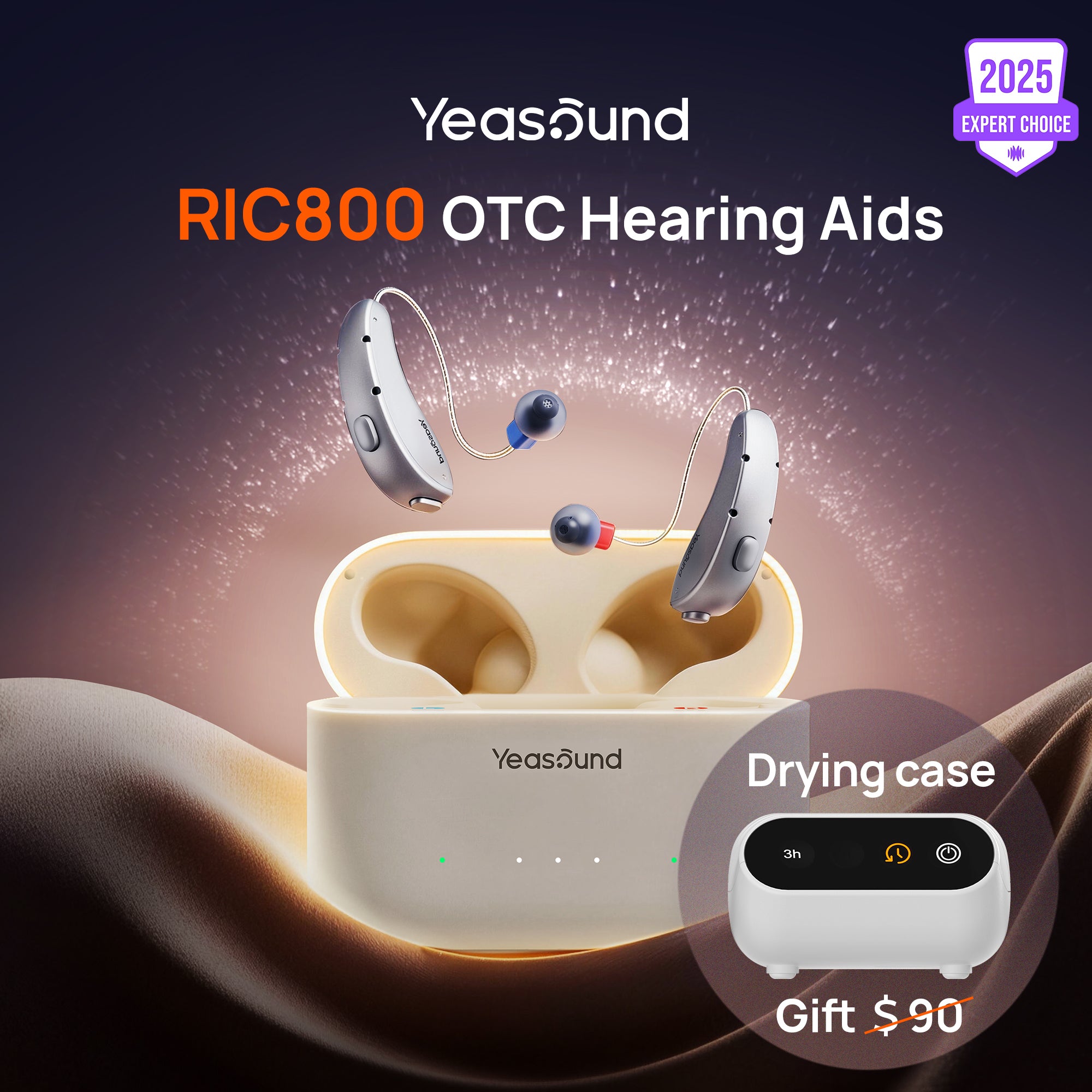
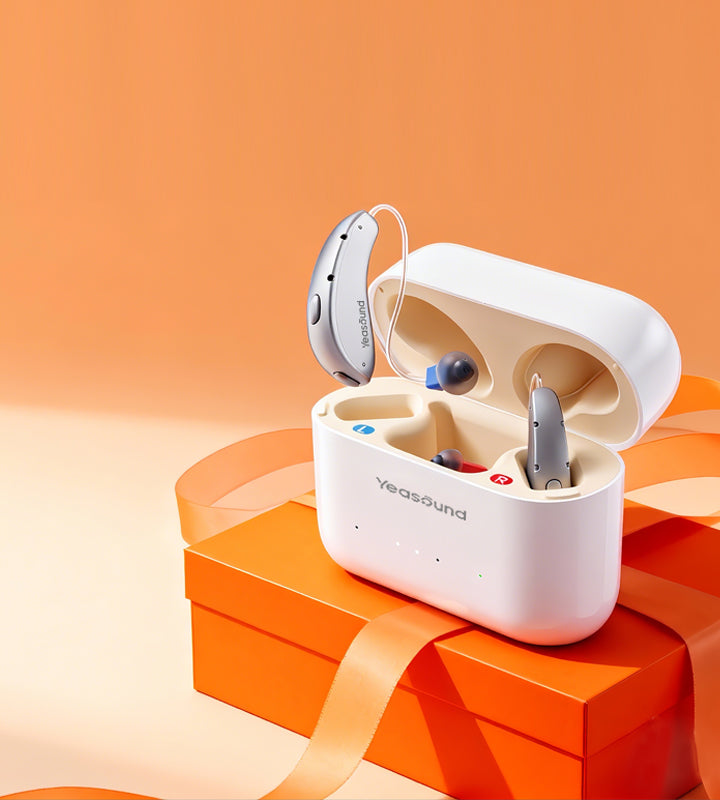
If you're asking what is the best hearing aid for elderly person in everyday situations like conversations, TV, and phone calls, a practical approach is to start with one well-balanced OTC option. Yeasound RIC800 is a practical OTC candidate to evaluate first.
Why it fits this specific scenario:
· AI-driven noise reduction, including wind and sudden-noise handling
· Auto speech focus support for conversation clarity
· Bluetooth streaming for both iOS and Android
· 31-hour single-charge battery life
· IPX8 waterproof protection for daily confidence
· 100-day no-reason return plus remote fine-tuning support
This does not mean it is automatically perfect for everyone. It means it is a strong first option for a low-regret trial path.
A 30-day test plan reduces “what if I chose wrong?” anxiety
Most purchase anxiety comes from uncertainty, not from one feature. Using this hearing test plan first.
Day 1–5: Baseline notes
Write down your hardest situations:
· Which voices are hardest to catch?
· Which places feel most tiring?
· Which time of day feels worst?
Day 6–15: Real-world use
Test in the same practical settings:
· One quiet conversation at home
· One noisy meal setting
· One TV session
· One phone call
Use short notes only. Keep it simple.
Day 16–30: Decision review
Ask three questions:
· Is speech clearer where it matters most?
· Is wearing time increasing naturally?
· Is daily adjustment effort acceptable?
If yes, keep moving. If no, adjust early.That is not failure. That is smart decision-making.
FAQ
How do I know whether this is normal aging or something to act on?
If communication friction is recurring and affects daily life, it is worth taking seriously. Common signs include asking people to repeat, turning up the TV, avoiding group conversations, or feeling tired after listening. You do not need to wait for a major decline before comparing options or getting a hearing check.
Are OTC hearing aids enough for mild-to-moderate hearing loss?
For many adults with perceived mild-to-moderate hearing difficulty, OTC hearing aids can be a practical first step. They are best suited for everyday situations like conversation, TV, and phone calls. If hearing loss is sudden, one-sided, severe, or medically unclear, a professional hearing evaluation is the safer choice.
What if I choose the wrong hearing aid first?
A first choice does not have to be permanent. Use a structured trial mindset and test the hearing aid in the same real situations each day, such as family talk, restaurants, TV, and phone calls. Return policies, support options, and adjustment tools can reduce the risk of choosing wrong.
Which hearing aid is best for elderly people who want simple daily use?
The best option is usually the one a person will actually wear consistently. Look for comfortable fit, clear speech support, simple volume or mode controls, rechargeable use, and dependable support. A long feature list matters less than whether the device feels easy during normal daily routines.
How long should I test before deciding?
A practical four-week test is usually enough to see whether a hearing aid fits daily life. Try it in quiet conversation, a noisy meal, TV listening, and at least one phone call. Track speech clarity, comfort, wearing time, and adjustment effort before deciding whether to keep, adjust, or compare.
If you want one clear next action today, define your top two listening pain points and you can use this 5mins online hearing test to help you make a decision. That small step often breaks the cycle of hesitation and helps you choose with confidence.