




Hearing loss is not the same for everyone. Depending on which part of the ear is affected, hearing loss is generally classified into three main types: conductive hearing loss, sensorineural hearing loss, and mixed hearing loss.
Understanding these differences can help explain why hearing problems occur and what types of treatments may be helpful.

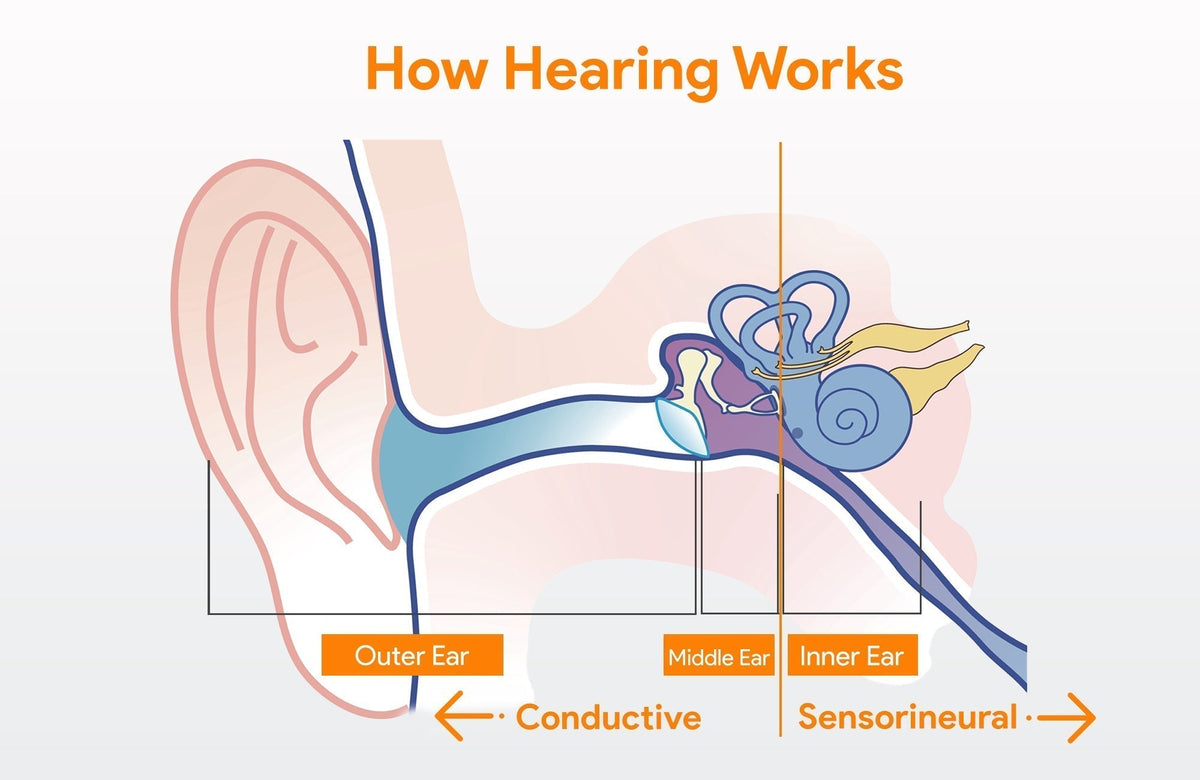
How Hearing Works
To understand the different types of hearing loss, it helps to know how sound travels through the ear.
Sound moves through three main parts of the ear:
Outer ear – collects sound
Middle ear – amplifies sound vibrations
Inner ear – converts sound vibrations into signals that the brain interprets as sound
When a problem occurs in one or more of these parts, hearing loss can develop.
Conductive Hearing Loss
Conductive hearing loss occurs when sound cannot efficiently travel through the outer ear or middle ear to reach the inner ear.
Common causes include:
Earwax blockage
Fluid in the middle ear
Middle ear infections
Eardrum perforation
Problems with the tiny middle ear bones (ossicles)
Because sound is being blocked or reduced, people with conductive hearing loss often experience:
Muffled or quieter sounds
A feeling of fullness in the ear
Temporary hearing difficulty
In many cases, conductive hearing loss is temporary or medically treatable once the underlying problem is addressed.
Sensorineural Hearing Loss
Sensorineural hearing loss occurs when there is damage to the inner ear or the auditory nerve that carries sound signals to the brain.
This is the most common type of permanent hearing loss.
Common causes include:
Aging (presbycusis)
Long-term noise exposure
Genetic factors
Certain illnesses or medications
People with sensorineural hearing loss often report:
Hearing loss that develops gradually over time
Difficulty understanding speech clearly
Trouble hearing in noisy environments
"I can hear people talking, but I can't understand them."
This type of hearing loss usually affects high-frequency sounds, which include many consonants important for speech clarity.
While sensorineural hearing loss cannot usually be medically reversed, hearing devices and other hearing solutions can help improve access to sound.
Mixed Hearing Loss
Mixed hearing loss is a combination of conductive hearing loss and sensorineural hearing loss.
This means there are problems in both the middle/outer ear and the inner ear.
For example:
A person might have:
Age-related inner ear hearing loss and
Fluid in the middle ear or an ear infection
In these cases, treatment may involve addressing the conductive component medically while also managing the sensorineural component with hearing devices.
A Simple Way to Remember
|
Type of Hearing Loss
|
Where the Problem Occurs
|
Typical Cause
|
|---|---|---|
|
Conductive
|
Outer or middle ear
|
Blockage, infection, fluid
|
|
Sensorineural
|
Inner ear or auditory nerve
|
Aging, noise damage, genetic factors
|
|
Mixed
|
Both areas
|
Combination of causes
|
Final Thoughts
Understanding the different types of hearing loss can help you better recognize changes in your hearing.
If you notice signs such as difficulty understanding speech, trouble hearing in noisy environments, or ear pain, it's important to check your hearing and explore possible solutions early.




Share:
Stay Updated
Get the latest hearing tips & news delivered to your inbox.