



If you are asking, will Medicare pay for hearing aids, the answer depends on which Medicare coverage you mean. This article is written for U.S. Medicare decisions, not for every country's health insurance system. Hearing aid reimbursement rules can differ by country, state, private insurer, employer plan, and individual policy.

For Original Medicare in the United States, the short answer is usually no. As of 2026, Medicare.gov's hearing aid coverage page says Medicare does not cover hearing aids or exams for fitting hearing aids. That surprises many people because hearing affects communication, safety, work, family life, and confidence.
The important point is precision. Original Medicare, Medicare Advantage, diagnostic hearing exams, routine fitting exams, private supplemental benefits, and out-of-pocket OTC options are not the same thing. If you mix them together, the coverage question becomes more confusing than it needs to be.
Original Medicare vs Medicare Advantage: What Changes
Original Medicare and Medicare Advantage should be checked separately.
Original Medicare generally does not cover routine hearing aids or exams for fitting hearing aids. Medicare may cover certain diagnostic hearing and balance exams when a doctor or other health care provider orders them to determine whether medical treatment is needed. That is different from paying for hearing aids themselves.
Medicare Advantage plans are offered by private insurers approved by Medicare, and some plans may include extra hearing benefits. Those benefits can change by plan, county, network, year, copay, device allowance, and provider rules. One plan may offer a hearing aid allowance. Another may require specific vendors. Another may cover an exam but limit device choices.
So the careful answer is: do not assume coverage from the word "Medicare" alone. Check the exact plan documents, especially the Evidence of Coverage, Summary of Benefits, annual plan updates, network rules, and any hearing aid allowance language.
What to Check Before Assuming You Are Covered
Before you shop, check the plan details in writing.
|
Question to ask |
Why it matters |
What to write down |
|---|---|---|
|
Does my plan cover hearing aids? |
Not all plans do |
Yes/no and benefit year |
|
Is there an annual allowance? |
Helps estimate out-of-pocket cost |
Dollar amount and limits |
|
Must I use an in-network provider? |
Out-of-network care may not count |
Provider names and locations |
|
Are only certain brands covered? |
Your preferred device may be excluded |
Covered brand list |
|
Are fitting fees included? |
Extra service fees can surprise you |
Included vs separate fees |
|
What is the replacement cycle? |
Benefits may not renew yearly |
Every 1, 2, 3, or more years |
|
Is there a trial or return policy? |
Hearing aids need real-world testing |
Window length and conditions |
Call the plan, check the Evidence of Coverage, and confirm details before buying. If possible, ask for the answer in writing or save the plan document section.

Be Careful With Insurance Advice That Sounds Too Universal
Hearing aid coverage is not a one-size-fits-all policy question.
If a blog, ad, or salesperson says "Medicare covers hearing aids" without explaining the plan type, treat that as incomplete information. If someone says "Medicare never helps with hearing care," that may also be too broad because diagnostic exams and Medicare Advantage extras can create exceptions.
Use three filters before making a budget decision: your country or program, your exact insurance plan, and the reason for the hearing service. A diagnostic exam ordered for medical reasons is not the same as a routine fitting exam. A plan allowance is not the same as unlimited coverage. A discounted vendor network is not the same as reimbursement for any device you choose.
If Coverage Is Limited, OTC Hearing Aids May Be a Practical Alternative
OTC hearing aids may be worth comparing when Medicare coverage is limited and your hearing difficulty is perceived mild-to-moderate.
The FDA says OTC hearing aids are intended for adults 18 and older with perceived mild-to-moderate hearing loss. They can often be purchased online or in stores without a prescription, which gives clearer upfront pricing.
The trade-off is that OTC hearing aids do not replace medical evaluation for severe, sudden, one-sided, or medically unclear hearing problems. They are a convenience and affordability path for the right user, not a universal substitute for prescription care.
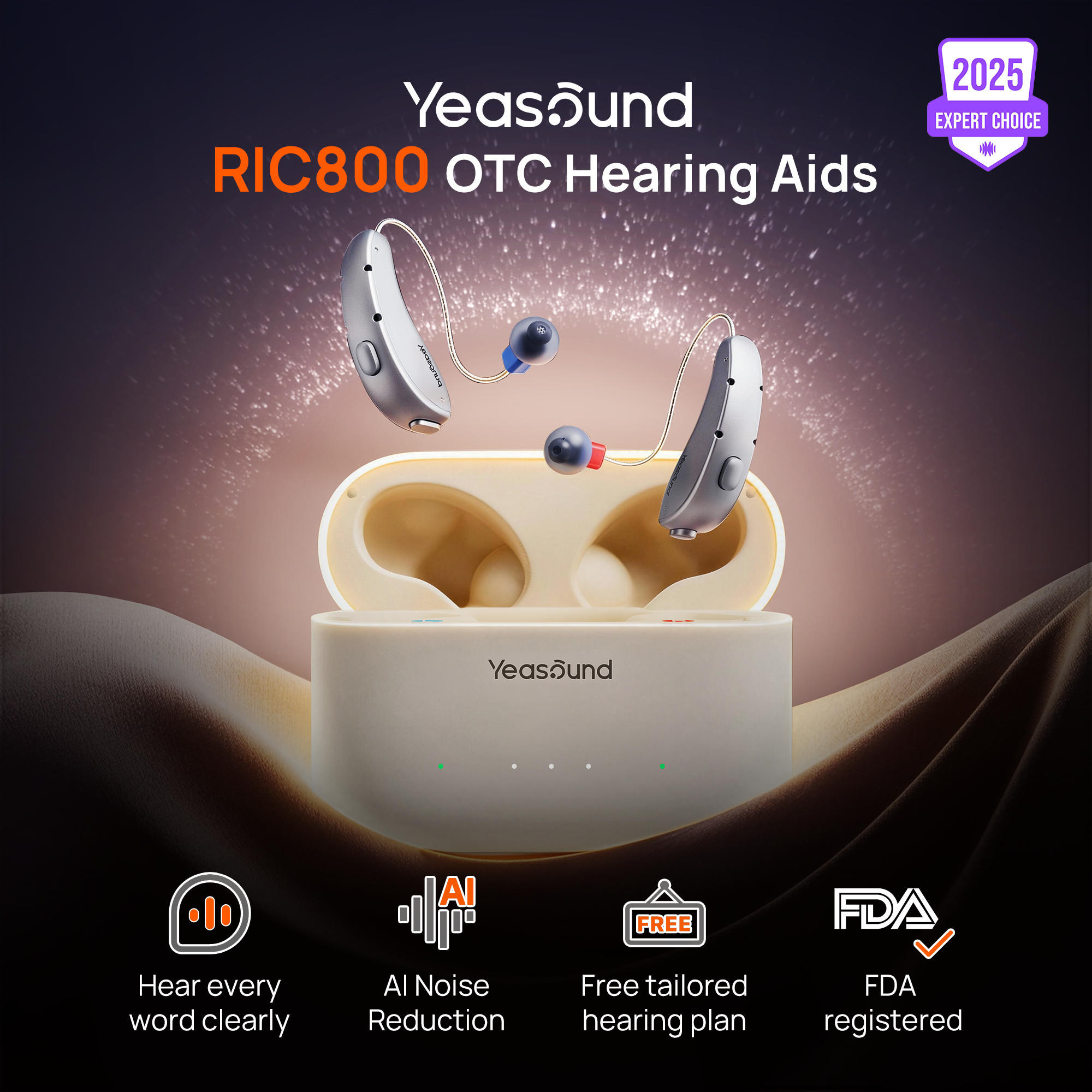
If your plan does not cover the device you want, Yeasound RIC800 is one OTC option to compare. It offers app adjustment, AI noise reduction, auto speech focus, rechargeable use, Bluetooth streaming for iOS and Android, a 100-day return window, 1-year U.S. warranty, and remote audiologist support. Those features matter when you need a lower-risk way to test whether hearing support improves daily conversation.
When Paying Out of Pocket May Still Be the Safer Decision
Waiting for perfect coverage can also carry a cost.
If hearing difficulty is affecting family conversation, phone calls, work, safety, or social confidence, delaying only because coverage is unclear may prolong daily strain. The right out-of-pocket decision depends on hearing level and risk.
Consider three paths:
• Wait and review plan options: reasonable if symptoms are minor and you can compare benefits during enrollment.
• Try an OTC option: reasonable for adults with perceived mild-to-moderate hearing loss and no red flags.
• Choose professional care: better for severe, sudden, one-sided, medically complex, or unclear hearing problems.
This is not only about saving money. It is about choosing the path that fits both your coverage and your hearing profile.
Build a Smarter Hearing Aid Budget
A good hearing aid budget includes more than device price.
Include:
1. Device cost
2. Fitting or setup costs
3. Trial and return rules
4. Warranty
5. Batteries or rechargeable accessories
6. App compatibility
7. Follow-up support
8. Replacement timeline
If you have Medicare Advantage hearing benefits, compare the plan-supported option against OTC and prescription alternatives side by side. A covered device with limited choice may still cost more than expected. An OTC device with a return policy may be lower risk than waiting. Prescription care may be worth the extra cost when hearing needs are complex.
Does Original Medicare pay for hearing aids?
No. As of 2026, Original Medicare does not cover hearing aids or exams for fitting hearing aids. It may cover certain diagnostic hearing and balance exams when coverage requirements are met, but that is different from paying for hearing aids.
Do Medicare Advantage plans cover hearing aids?
Some Medicare Advantage plans may offer hearing benefits, including hearing aid allowances or network-based options. Benefits vary by plan, location, year, provider network, and covered brands. Always check your plan documents before buying.
What hearing benefits should I check in my plan?
Check the annual allowance, covered providers, covered brands, fitting fees, copays, replacement cycle, trial period, and whether OTC devices qualify. Do not rely only on the phrase "hearing benefit."
Are OTC hearing aids a good alternative if Medicare does not cover me?
They may be a practical alternative for adults 18 and older with perceived mild-to-moderate hearing loss. They are not appropriate for severe, sudden, one-sided, or medically unclear symptoms, where professional evaluation should come first.
When should I choose prescription hearing aids instead?
Prescription hearing aids may be better when hearing loss is severe, asymmetric, medically complex, or difficult to fit. They may also be better if you need in-person testing, custom programming, or ongoing clinical follow-up.
Start with your coverage facts, then your hearing needs. Confirm what Medicare or your Medicare Advantage plan actually covers. If coverage is limited and your hearing difficulty is mild-to-moderate, compare OTC options with clear return and support policies. If your symptoms are complex, put professional evaluation first.



Share:
Stay Updated
Get the latest hearing tips & news delivered to your inbox.