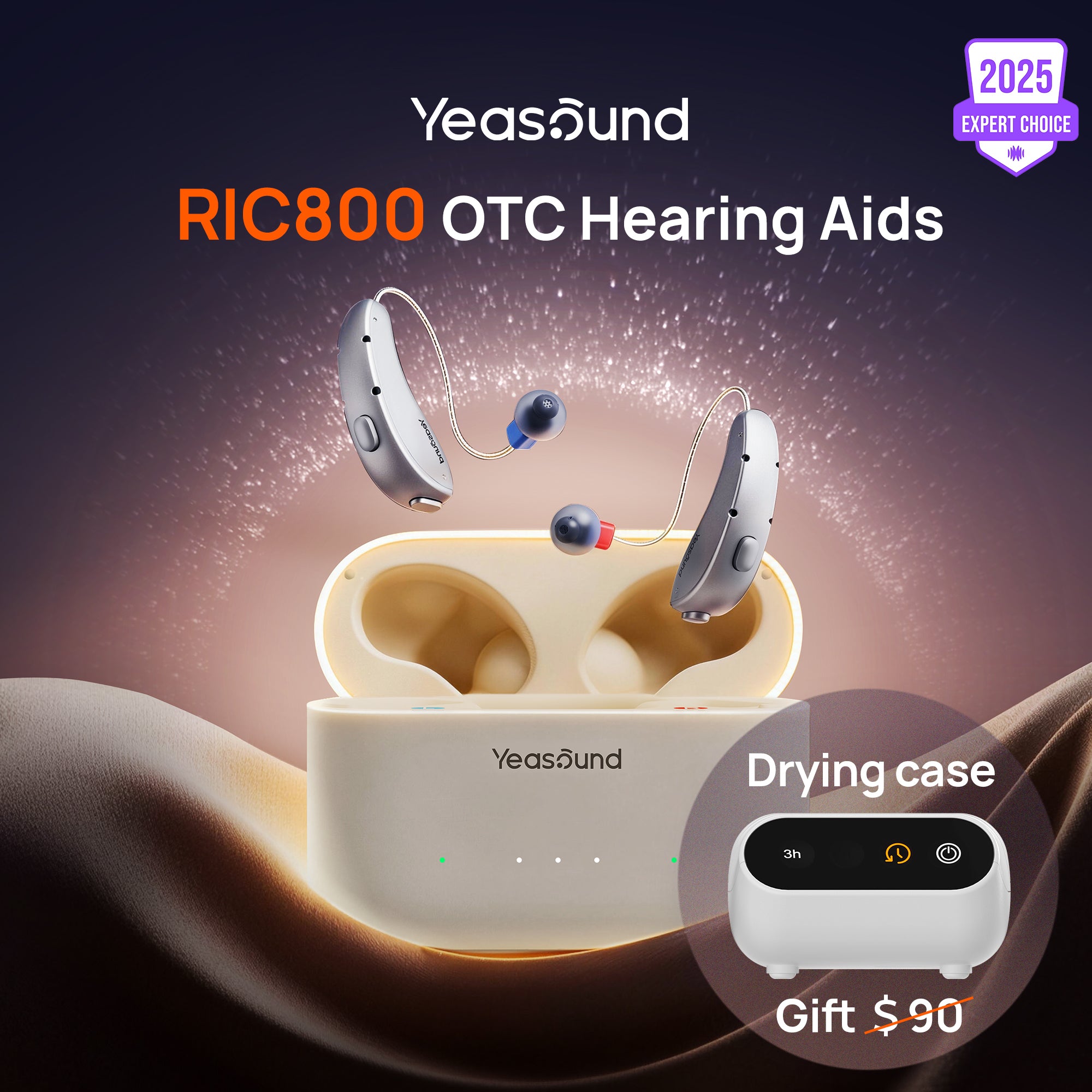
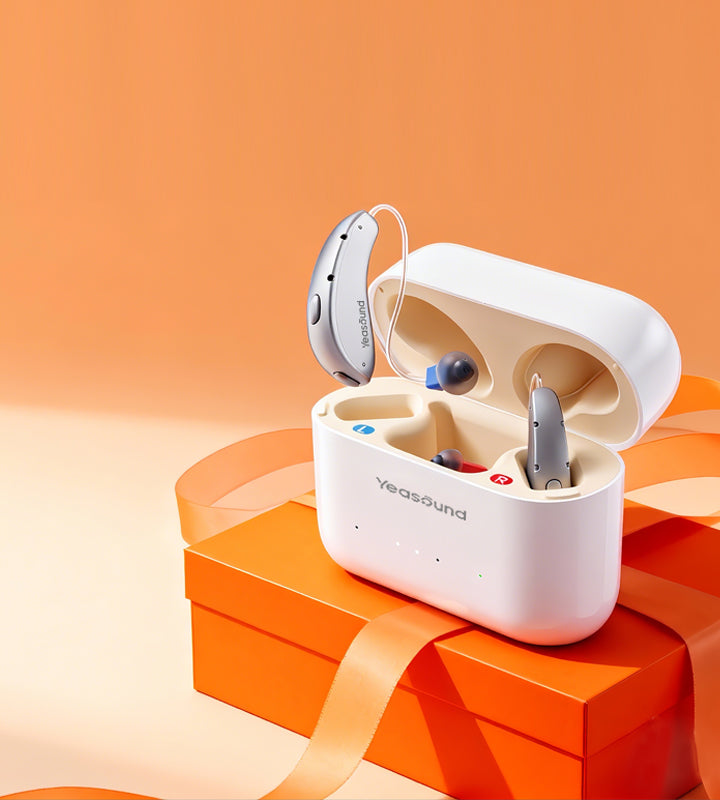
Hearing aids are vital for clear hearing, but like most electronics, they can be affected by water—whether from sweat, rain, or high humidity.
The RIC700 and RIC800 models feature IPX8 waterproofing, which means they can withstand full immersion in water. However, proper drying after exposure is still important to keep them performing optimally.

1. Turn Off Your Hearing Aids
For rechargeable RIC700 and RIC800 models, make sure to switch them off before drying.
Even with IPX8 water resistance, powering them down helps protect the internal electronics while moisture evaporates.
To turn off RIC700 and RIC800 models, press and hold the upper button for 5 seconds. You'll hear a tone indicating that the hearing aid has powered off.
2. Wipe Away Moisture
Use a soft, dry cloth that doesn't shed fibers to gently clean the surface, including the casing, microphones, and receiver area.
Avoid heat sources like hair dryers, ovens, or direct sunlight, which can damage the electronics.
3. Optional: Use a Drying Device or Desiccant Container
If available, you may place your hearing aids in a hearing aid drying box or a container with desiccant packs overnight.
While IPX8 protects the device against water intrusion, drying in this way can help remove any remaining moisture in small openings and prevent corrosion.
No dryer available? Simply skip this step and move on to air drying.
4. Air Dry in a Safe Location
After wiping, let your hearing aids sit in a cool, dry place for a few hours to ensure any remaining moisture evaporates.
Keep them away from direct sunlight and high temperatures, which could damage the device.
⚠️ Tips for Longevity
Even with IPX8 water resistance, occasional drying helps extend the life of your hearing aids.
Never use heat sources to dry your devices.
Consider keeping a small drying kit at home for daily protection, especially in humid climates.