



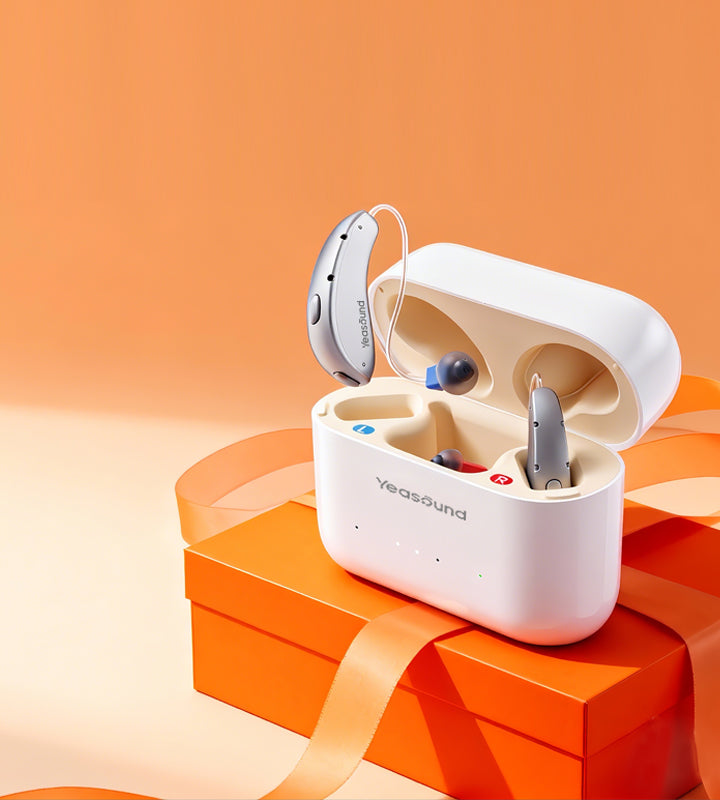

Buying OTC hearing aids can feel oddly backward. You are asked to compare features before you are fully sure what problem you are trying to solve. One product talks about AI, another talks about Bluetooth, another talks about invisible fit, and suddenly you are judging tiny devices like laptops. If you are wondering how to choose otc hearing aids, start with your day, not the product page.

The best first draft of your buying decision is not a brand list. It is a short list of moments you want back: hearing your spouse from the kitchen, catching a doctor's office phone call, following a meeting, watching TV without captions, or eating out without pretending you heard every word.
Write Down the Annoying Moments Before Looking at Devices
The first mistake is shopping with a vague goal like "hear better."
Write five real situations that happen often enough to bother you. Be specific. "Restaurants" is useful, but "I lose the server when there is music behind me" is better. "Phone calls" is useful, but "I miss appointment times unless the caller repeats them" is better.
This list keeps you from overbuying and underbuying at the same time. If your list is mostly quiet conversations and TV dialogue, you may not need the most complicated feature set. If it includes restaurants, open offices, and phone calls, you should pay more attention to noise handling, comfort, controls, and compatibility.
Check Whether OTC Is the Right Category
OTC hearing aids are not for every hearing situation.
The Hearing Loss Association of America explains that OTC hearing aids are intended for adults with perceived mild-to-moderate hearing loss and are available without a prescription: HLAA OTC Hearing Aids. That makes them more accessible, but it also puts more responsibility on the buyer.
If hearing changed suddenly, one ear is much worse, speech sounds distorted even when loud, or you have ear pain, drainage, dizziness, or severe difficulty, do not start with an online cart. Get professional care first. If the pattern is gradual and mostly about everyday speech clarity, OTC may be a reasonable category to compare.
Choose for Use, Not for Specs
The device you will wear consistently is better than the device with the longest feature list.
Fit comes first because discomfort ruins everything. Controls come next because you need to adjust volume or modes without stress. Battery life matters because a hearing aid that dies before dinner trains you not to trust it. iYeasound app control is useful if you like using a phone for volume, presets, treble, bass, and battery checks; it is a burden if you do not.
| Buying factor | Ask this before buying |
|---|---|
| Fit | Can I wear this for several hours without pressure or itching? |
| Controls | Can I adjust it quickly without asking someone else? |
| Sound | Does speech become clearer, or only louder? |
| Battery | Will it last through my real day? |
| Support | Can I get help if setup is confusing? |
| Return policy | Do I have enough time to test it in real life? |
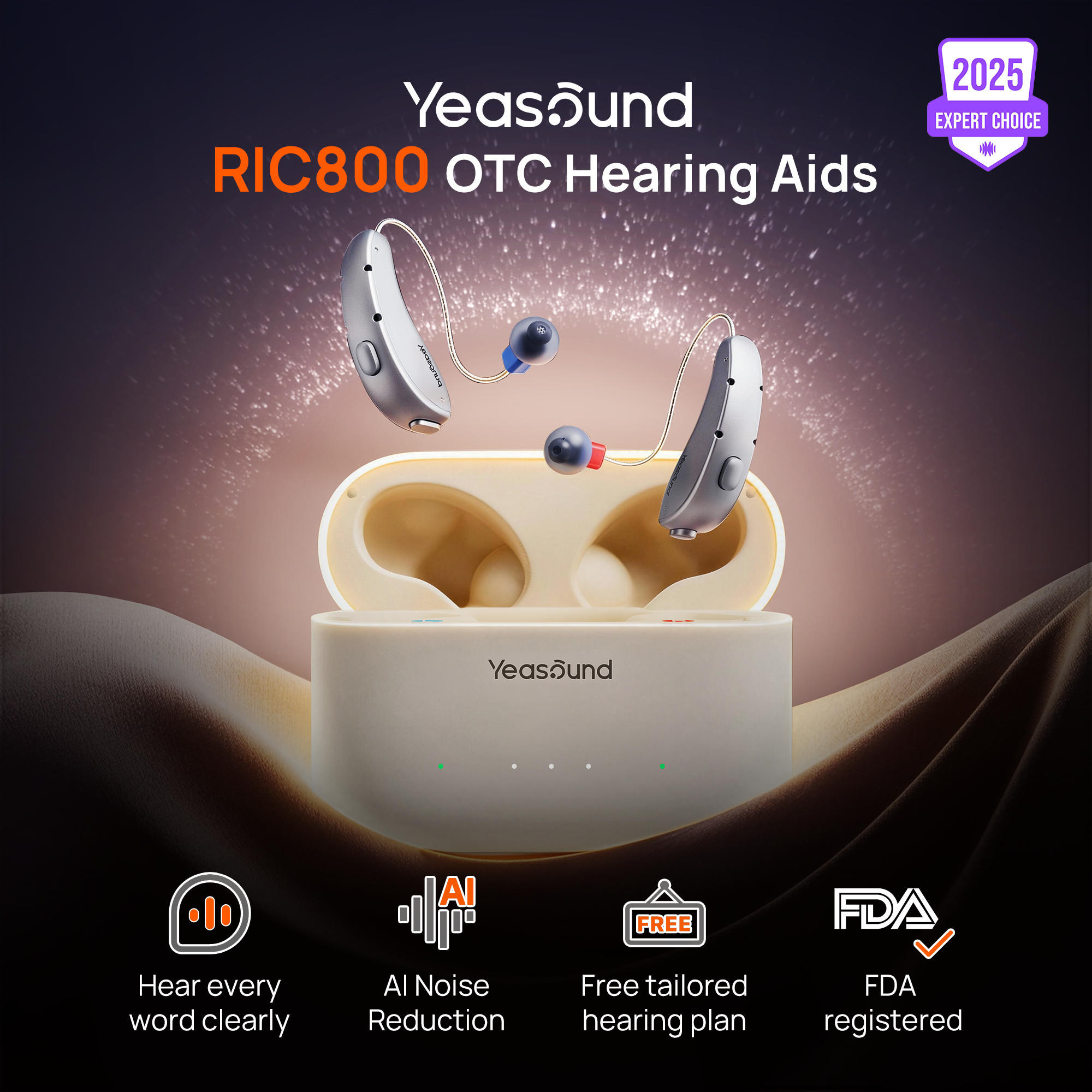
Yeasound RIC800 is one OTC option to compare against this kind of checklist. Its app controls, AI noise reduction, auto speech focus, rechargeable design, Bluetooth support, and trial window are useful only if they match your listening list.
Read the Return Policy Like Part of the Product
A return window is not fine print. It is the test period you are buying.
Hearing aids need real-world time. Your first hour may feel strange because your brain is hearing sounds it has been ignoring. The second week may tell you more than the first day. You need quiet conversations, errands, TV, phone calls, outdoor sound, and one noisy place before deciding.
Avoid any device that gives you too little time to adjust or no clear support path. A cheaper device with a weak return policy can be more expensive than a better-supported device you can actually test.
Be Honest About Who Will Use Them
Buying for yourself is different from buying for a parent.
If you are buying for someone else, do not choose based only on what you would use. Ask about hand dexterity, eyesight, phone comfort, memory for charging routines, and whether they prefer buttons or apps. A person who hates phone settings may not enjoy a device that depends on an app for every small adjustment.
Also consider pride. Some people are ready to wear visible hearing aids if they work well. Others need a more discreet design before they will even try. Neither reaction is silly. The right device has to fit both hearing needs and daily comfort.
FAQ
What should I check first when choosing OTC hearing aids?
Start with your real listening problems, then check whether OTC is appropriate. After that, compare fit, controls, speech clarity, battery life, support, device compatibility, and return policy.
Are expensive OTC hearing aids always better?
No. A higher price may buy stronger features or support, but the better choice is the one that fits your daily listening needs and is comfortable enough to wear.
How long should I test OTC hearing aids?
Use at least 30 days when possible. Test quiet speech, TV, phone calls, errands, outdoor sound, and one noisy place before deciding.
Should I choose Bluetooth hearing aids?
Choose Bluetooth if phone calls, streaming, video meetings, or app control matter in your daily life. If not, comfort and speech clarity may matter more.
When should I avoid OTC and see a professional?
Avoid OTC as a first step for sudden hearing changes, one-sided symptoms, dizziness, pain, drainage, severe loss, or speech that stays distorted even when loud.



Share:
Stay Updated
Get the latest hearing tips & news delivered to your inbox.