



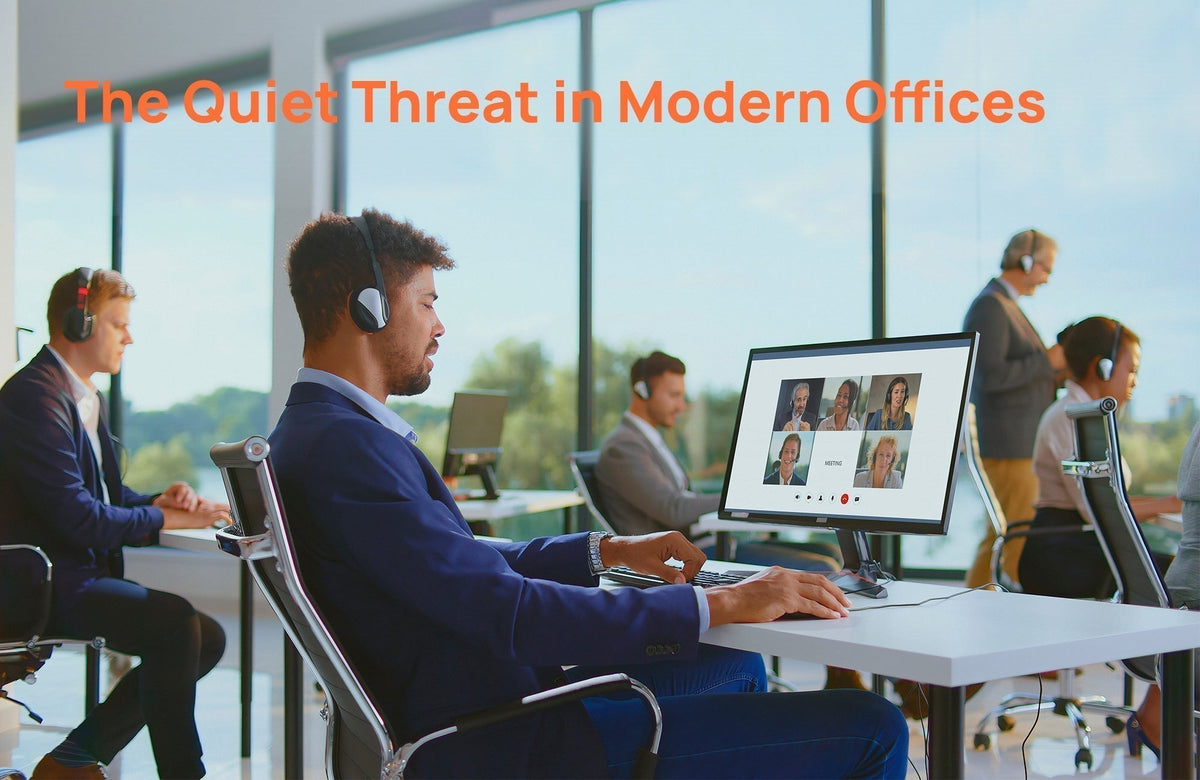
Introduction: The Quiet Threat in Modern Offices
When people think of hearing loss, they often picture construction sites or loud concerts. But in reality, many office workers are exposed to subtle, long-term risks that can gradually impact their hearing—often without realizing it.
From back-to-back virtual meetings to constant headphone use, modern work environments are changing how we listen—and how our hearing health is affected.

1. Prolonged Headphone Use: A Silent Contributor
For many professionals, headphones are essential for meetings, calls, and focus. However, extended use—especially at high volumes—can strain the auditory system.
Unlike sudden loud noise, this type of exposure is gradual and cumulative, making it harder to notice early damage.
Common risk patterns:
Wearing headphones for 4–8 hours a day
Increasing volume in noisy environments
Using in-ear devices without breaks
Over time, this can lead to difficulty understanding speech, especially in meetings or group discussions.
2. Virtual Meetings Fatigue and Listening Strain
Platforms like Zoom or Teams have become daily tools—but they also introduce new listening challenges.
Digital audio often lacks natural spatial cues, and compression can distort speech clarity. This forces the brain to work harder to fill in missing information.
What this means:
Increased listening effort
Faster cognitive fatigue
Difficulty following conversations in long meetings
Many office workers don’t realize that what they’re experiencing isn’t just “tiredness”—it could be early auditory strain.
3. Open Office Noise: Constant Background Interference
Open-plan offices are designed for collaboration, but they come with continuous background noise:
Keyboard typing
Conversations
HVAC systems
Phone notifications
Even if the noise isn’t loud, it creates a persistent listening challenge. The brain must constantly filter out irrelevant sounds to focus on speech.
This can lead to:
Reduced concentration
Misunderstood conversations
Mental exhaustion
4. Early Signs Often Go Unnoticed
Hearing loss doesn’t happen overnight. In office environments, the signs are often subtle:
Frequently asking others to repeat themselves
Struggling to follow conversations in meetings
Feeling exhausted after long listening periods
Increasing headphone volume over time
Because these symptoms develop gradually, many people attribute them to stress or workload—rather than hearing health.
5. Why Early Action Matters
Untreated hearing issues can affect more than just communication. They can impact:
Work performance
Confidence in meetings
Social interactions with colleagues
Addressing hearing challenges early can significantly improve both productivity and quality of life.
6. Simple Ways to Protect Your Hearing at Work
The good news is that small changes can make a big difference:
Follow the 60/60 rule: listen at no more than 60% volume for no longer than 60 minutes at a time
Take regular listening breaks
Use devices with better speech clarity instead of increasing volume
Be mindful of early warning signs
For those already experiencing difficulty, modern hearing solutions can provide discreet support—especially in work environments.
Conclusion: Rethinking Hearing Health in the Workplace
Hearing loss is no longer just a concern for high-noise industries. For office workers, the risks are quieter—but just as real.
By recognizing these hidden factors and taking proactive steps, professionals can protect their hearing while staying productive and connected.




Share:
Stay Updated
Get the latest hearing tips & news delivered to your inbox.