




You might miss a cashier's question through a plastic screen, a doctor's instruction when someone turns away, a friend's comment from the passenger seat, or a grandchild's voice from another room. None of these moments may seem dramatic alone. Together, they can make listening feel like work.

That is why hearing aids for mild hearing loss should not be framed as overreaction or defeat. The better question is whether the hearing difficulty is frequent enough to test support in the places where it actually bothers you.
Signs That Mild Hearing Loss Is Affecting Real Life
Repeated patterns matter more than one bad listening day.
Use this checklist:
• You ask people to repeat more often.
• TV dialogue sounds unclear even when it is loud enough.
• Restaurants or group conversations feel exhausting.
• Phone calls require more concentration.
• You miss names, numbers, or soft consonants.
• You avoid social situations because listening feels like work.
• Family members mention volume or repetition.
If one sign happens occasionally, it may not mean much. If several signs repeat weekly, mild hearing loss may already be affecting daily life.
A professional hearing test can clarify the pattern. If you want a first at-home reference, the Yeasound free online hearing test can help with hearing checks and supported device adjustment, but it should not replace clinical evaluation when symptoms are complex.
Mild Loss Is Often About Clarity, Distance, and Fatigue
Volume is only one part of mild hearing loss.
Many people with mild loss can hear a voice nearby but struggle when the speaker is far away, facing a sink, wearing a mask, talking from another room, or competing with road noise. Others do fine in the morning but feel worn down after a day of small listening misses.
That pattern matters because it changes what you should test. Do not only try a device while sitting quietly at home. Try it during errands, a walk with traffic nearby, a family meal, a hobby class, a small meeting, or a call where you usually miss details. A 30-day trial is useful because mild hearing problems can be inconsistent from day to day.
Are OTC Hearing Aids a Reasonable First Step?
OTC hearing aids can be a reasonable first step for many adults with perceived mild-to-moderate hearing loss.
The FDA states that OTC hearing aids are for adults 18 and older with perceived mild-to-moderate hearing loss. That fits many people whose main difficulty is conversation, TV, phone calls, and background noise.
OTC is not the right shortcut for every situation. Get professional care first if your hearing changed suddenly, one ear is much worse, you have pain, drainage, dizziness, pressure, or the loss seems severe.
The trade-off is convenience and affordability versus professional diagnostic certainty. For straightforward mild-to-moderate concerns, OTC may help you act sooner. For unclear or medical patterns, professional evaluation is safer.
What Features Matter More Than a Long Spec List
The best features are the ones that make daily wearing easier.
For mild hearing loss, prioritize:
• Comfortable fit: A device only helps if you wear it consistently.
• Speech clarity in noise: Mild loss often shows up first in restaurants and group talk.
• Easy adjustment: App controls reduce frustration when environments change.
• Rechargeable use: A simple routine supports daily use.
• Support access: Early adjustments can make or break the trial.
• Return policy: Useful when you are unsure whether mild loss needs amplification.
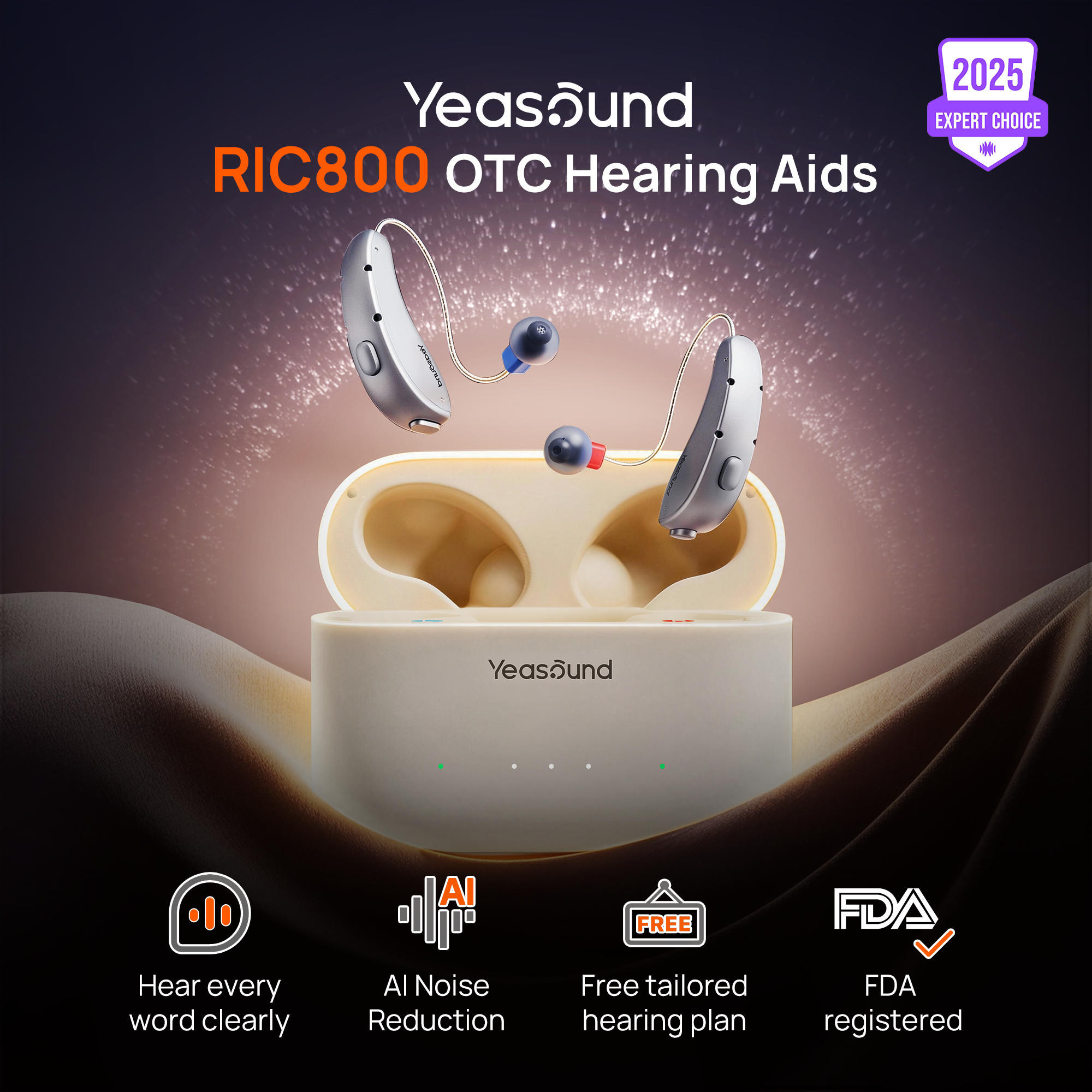
Yeasound RIC800 is relevant here because it combines an RIC design, AI noise reduction, auto speech focus, iYeasound App adjustment, Bluetooth streaming for iOS and Android, rechargeable use, remote support, and a 100-day return window. Those features are useful when the goal is not maximum amplification, but easier speech clarity in everyday environments.
RIC800 vs RIC700 Consideration for Mild Hearing Loss
The better choice depends on phone use, noise needs, and budget.
|
Need |
RIC800 may fit better |
RIC700 Plus may fit better |
|---|---|---|
|
Bluetooth streaming |
iOS, Android |
iOS-only |
|
Stronger noise cancellation |
AI-driven noise reduction and auto speech focus |
Smart noise reduction |
|
Tinnitus relief |
Includes six white noise options |
Not the stronger fit |
|
Lower entry price |
Higher than RIC700 |
More budget-sensitive option |
|
Duration |
31 hours per charge |
31 hours per charge |
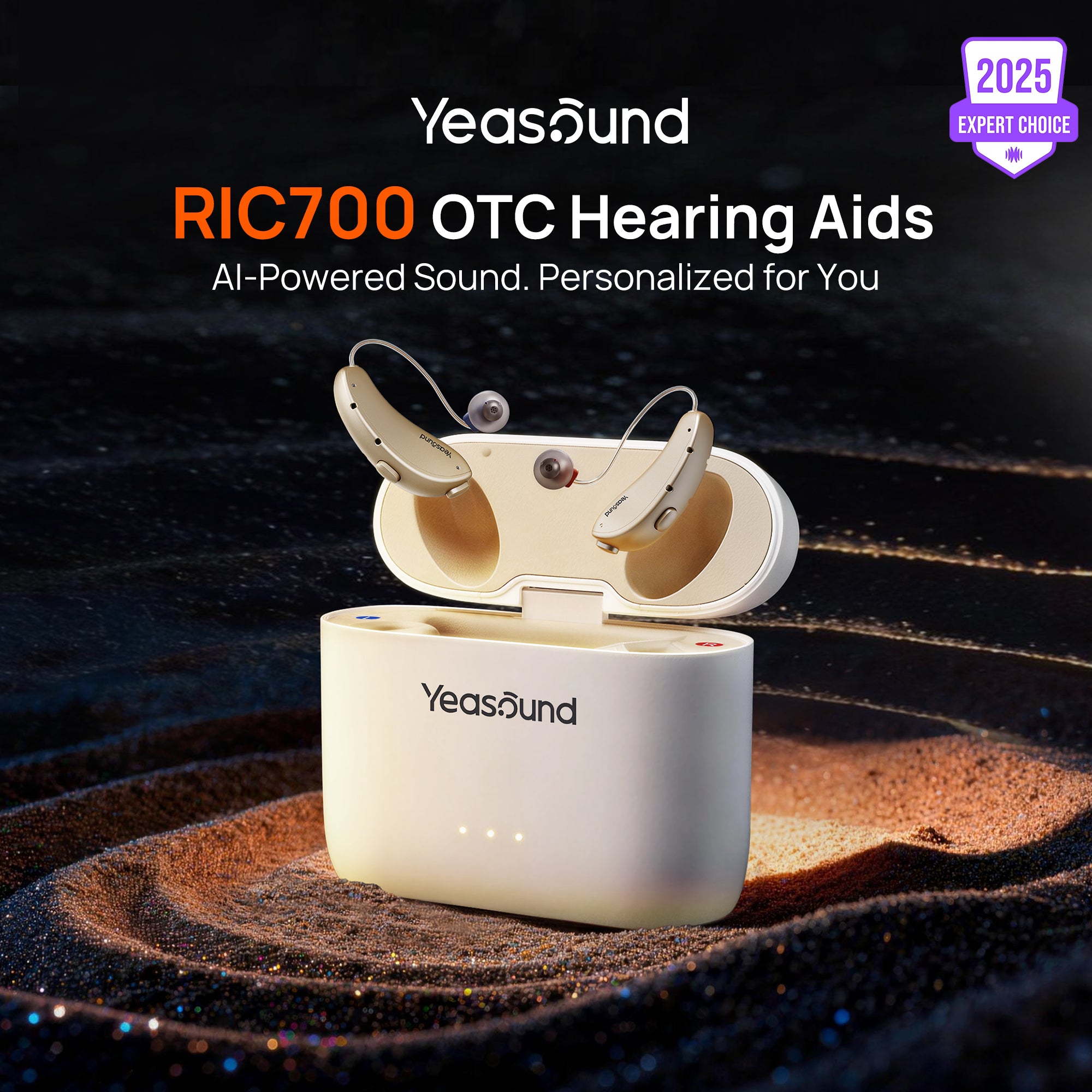
If noise, Android streaming, tinnitus relief, and adaptive controls matter, RIC800 is the stronger feature fit. If price sensitivity is the top concern and iOS-only Bluetooth is acceptable, RIC700 Plus may be worth comparing.
Do not decide by price alone. Decide by the situations you want to improve.
A 30-Day Trial Plan Before You Decide

Mild hearing loss is best evaluated in real life.
Use a 30-day test:
1. Day 1-5: Write down baseline problems: TV, phone, family talk, restaurants, fatigue.
2. Day 6-15: Test quiet conversation, TV dialogue, and one phone call.
3. Day 16-25: Test a noisy meal, store, or outdoor walk.
4. Day26-30: Review clarity, comfort, battery routine, adjustment effort, and willingness to wear.
Do not expect every environment to feel perfect. Look for meaningful improvement where the problem affects your life most.
If the device helps but settings feel off, use support before deciding. If it does not help, or if hearing still feels unusually unclear, consider professional testing.
Do I really need hearing aids for mild hearing loss?
Not everyone with mild hearing loss needs hearing aids immediately. They may be worth trying if listening friction is recurring, affects conversations, increases fatigue, or makes you avoid social situations.
Can mild hearing loss get worse if I wait?
Mild hearing loss may stay stable or change over time depending on the cause. Waiting does not always make things worse, but delaying support can prolong communication strain. Regular testing helps you track changes.
Are OTC hearing aids enough for mild hearing loss?
For many adults with perceived mild-to-moderate hearing loss, OTC hearing aids can be a practical first step. They are not intended for severe, sudden, one-sided, or medically complex hearing problems.
What features should I prioritize first?
Prioritize speech clarity in noise, comfort, easy app adjustment, rechargeable use, support, and return policy. Advanced features matter only if they improve your actual listening routine.
How long should I test hearing aids before deciding?
30 days is a practical starting point. Test quiet conversation, noisy settings, TV, phone calls, comfort, and fatigue. If the first settings feel wrong, adjust before making a final decision.
Mild hearing loss does not need a dramatic response. It needs an honest look at daily effort. If missed words, TV strain, or noisy conversations keep repeating, a well-supported OTC trial may be a reasonable way to learn what helps.



Share:
Stay Updated
Get the latest hearing tips & news delivered to your inbox.