



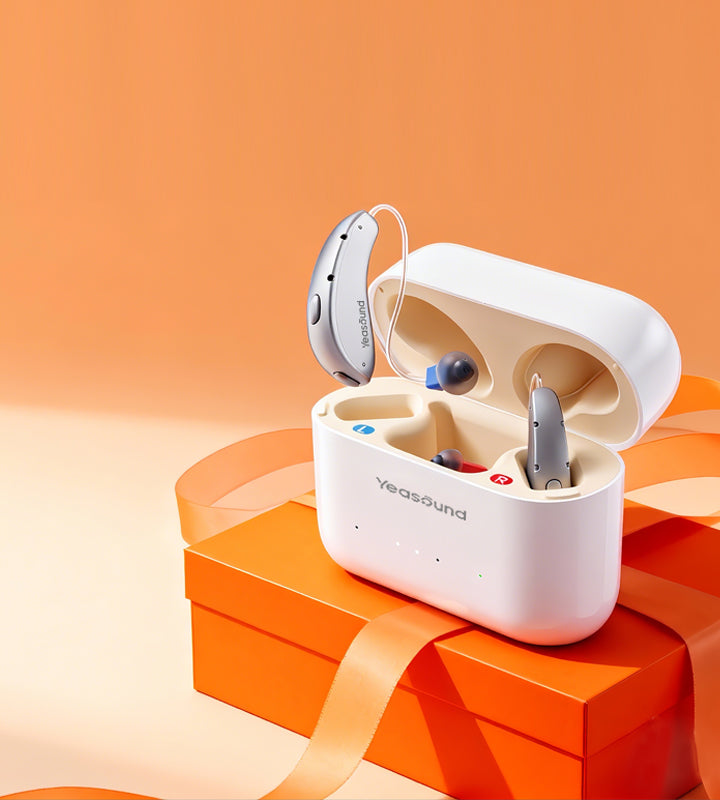

Many people with hearing loss in both ears ask the same question:
"Do I really need two hearing aids?"
"Do I really need two hearing aids?"
The short answer is: When both ears have hearing loss, two hearing aids are usually the best solution. Let's explore why.

1️⃣ The Importance of Binaural Hearing
Humans are designed to hear with two ears. This natural system is called binaural hearing — and it plays a critical role in how we understand the world around us.
When both ears work together, the brain can:
Determine where sounds are coming from (sound localization)
Separate speech from background noise
Process sound more clearly and efficiently
Reduce listening effort and fatigue
Hearing is not just about the ears — it's about how the brain integrates signals from both sides. When both ears receive amplified sound, the brain can perform at its best.
2️⃣ Speech Understanding in Noise
One of the biggest challenges for people with hearing loss is understanding speech in noisy environments.
Binaural hearing provides two key advantages:
Binaural summation – The brain combines signals from both ears, making sound clearer and slightly louder without increasing volume.
Binaural squelch – The brain uses differences between the two ears to help separate speech from background noise.
With two hearing aids, users often report:
✔ Clearer conversations in restaurants
✔ Better performance in meetings
✔ Improved communication in group settings
✔ Better performance in meetings
✔ Improved communication in group settings
3️⃣ Sound Localization and Safety
Our ability to detect where sound is coming from depends on tiny timing and loudness differences between the ears.
Without balanced input from both ears, it becomes difficult to:
Tell which direction someone is calling from
Locate approaching vehicles
React quickly in dynamic environments
Binaural hearing contributes not only to communication — but also to safety and spatial awareness.
4️⃣ Auditory Stimulation and Brain Health
The brain needs consistent stimulation from both ears to maintain strong auditory pathways.
When both ears are amplified appropriately:
The brain continues to process balanced input
Auditory pathways remain active
Listening becomes more natural over time
Supporting both ears helps preserve long-term auditory performance.
5️⃣ When Is One Hearing Aid Appropriate?
Wearing one hearing aid is appropriate when hearing loss affects only one ear.
If one ear has normal hearing and the other ear has hearing loss (unilateral hearing loss), a single hearing aid may be sufficient to restore balance.
In these cases:
The normal-hearing ear already provides full auditory input
The goal is to support the weaker ear
Binaural processing remains intact once the poorer ear is amplified
The Bottom Line
When hearing loss affects both ears, binaural amplification supports clearer speech understanding, better sound localization, reduced listening effort, and healthier auditory processing.




Share:
Stay Updated
Get the latest hearing tips & news delivered to your inbox.