




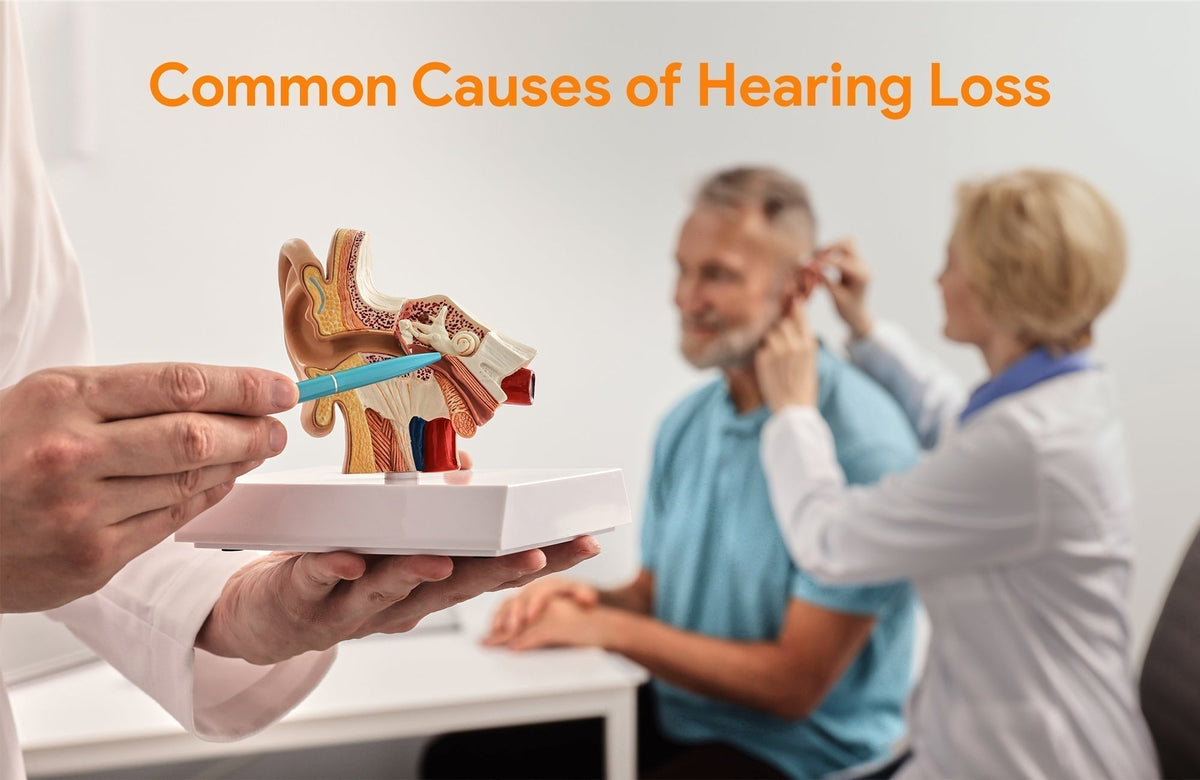
Hearing loss can happen to anyone, at any age. Some people are born with it, while others develop it gradually over time. Understanding the causes of hearing loss can help people recognize early signs and take steps to protect their hearing.
In general, hearing loss can be divided into congenital (present at birth) and acquired (developing later in life).

Congenital Hearing Loss (Present at Birth)
Some people are born with hearing loss. This is known as congenital hearing loss, and it may be caused by genetic or developmental factors.
Common causes include:
Genetic factors
Hearing loss can run in families. Certain inherited conditions affect how the inner ear develops or functions.
Hearing loss can run in families. Certain inherited conditions affect how the inner ear develops or functions.
Complications during pregnancy
Infections during pregnancy, premature birth, or lack of oxygen at birth can affect a baby's hearing development.
Infections during pregnancy, premature birth, or lack of oxygen at birth can affect a baby's hearing development.
Structural differences in the ear
Some individuals are born with differences in the structure of the outer, middle, or inner ear that affect hearing.
Some individuals are born with differences in the structure of the outer, middle, or inner ear that affect hearing.
Early hearing screening programs help identify these conditions so treatment or hearing support can begin as early as possible.
Age-Related Hearing Loss
One of the most common causes of hearing loss is age-related hearing decline, also known as presbycusis.
As we age, the delicate hair cells inside the inner ear gradually wear down. This process happens slowly over time, often without people noticing at first. As a result, it becomes harder to hear high-frequency sounds, such as consonants in speech.
People with age-related hearing loss often say:
"I can hear people talking, but I can't understand them clearly."
"It's especially hard to follow conversations in noisy places."
Age-related hearing loss typically develops slowly over many years.
Noise-Induced Hearing Loss
Frequent exposure to loud sounds can damage the inner ear and lead to noise-induced hearing loss.
Common sources include:
Loud music or concerts
Headphones at high volume
Construction or factory noise
Fireworks or gunshots
The tiny hair cells in the inner ear can be permanently damaged by excessive noise, and once these cells are damaged, they cannot regenerate.
Using hearing protection and keeping headphone volume at safe levels can help reduce this risk.
For more information about noise-induced hearing loss, check out our blog 【Noise-Induced Hearing Loss】
Illness and Medical Conditions
Certain health conditions and infections can also affect hearing.
Examples include:
Ear infections
Viral infections that affect the inner ear
Meniere's disease
Head trauma
In some cases, hearing loss may appear suddenly and requires prompt medical evaluation.
For more information about symptoms that require immediate medical attention, check our blog on【When Is Hearing Decline Not "Normal"?】
Medications That Affect Hearing
Some medications can damage the inner ear and cause hearing loss or tinnitus. These are called ototoxic medications.
Examples may include certain:
Antibiotics
Chemotherapy drugs
This type of hearing loss is relatively uncommon but important to be aware of when using certain medications long-term.
Middle Ear Problems
Problems in the middle ear can also lead to hearing loss. This type of hearing loss is often called conductive hearing loss, which happens when sound cannot travel efficiently through the outer or middle ear to reach the inner ear.
Common middle ear conditions include:
Middle ear infections
Fluid buildup behind the eardrum
Eustachian tube dysfunction
These conditions can cause symptoms such as muffled hearing, ear pain, or sudden changes in hearing. In many cases, the hearing loss is temporary and may improve once the underlying problem is treated. If you experience any of these symptoms, it is important to see a healthcare professional for evaluation and treatment.
Earwax Blockage
Not all hearing loss is permanent. Sometimes it is caused by something simple, such as earwax buildup blocking the ear canal.
In these cases, removing the blockage can restore hearing.
Final Thoughts
Hearing loss can develop for many different reasons. While some causes cannot be prevented, many forms of hearing loss can be managed or treated when identified early.
If you notice signs such as difficulty understanding speech, needing to increase the volume on devices, or struggling in noisy environments, it may be helpful to check your hearing and explore available hearing solutions.



Share:
Stay Updated
Get the latest hearing tips & news delivered to your inbox.