



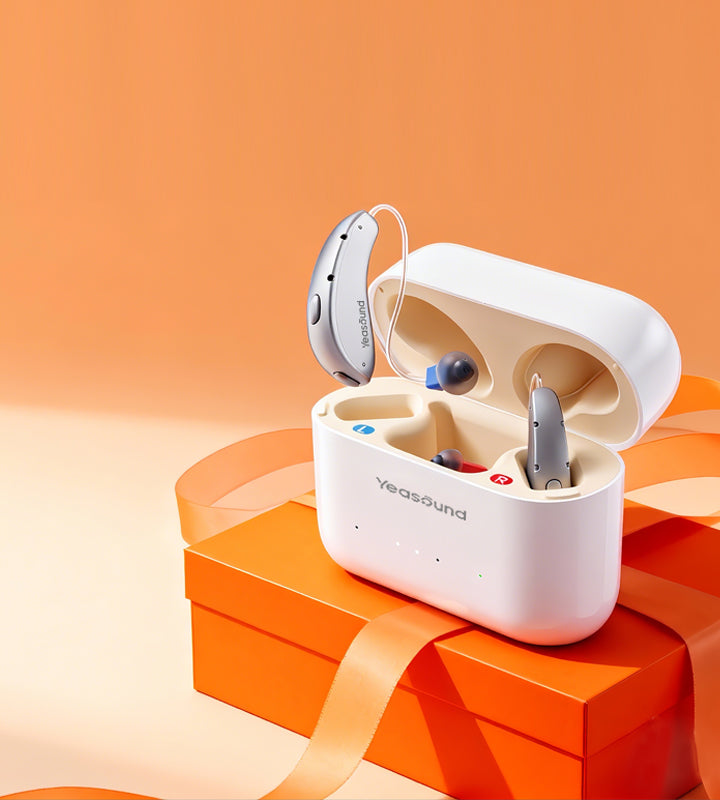

The best hearing aids for tinnitus are not simply the ones with the most masking sounds. They are the ones that fit the way tinnitus shows up in your day.

For one person, tinnitus is mostly a bedtime problem. For another, it becomes harder to ignore after a noisy commute, a long shift, a crowded store, or an afternoon of straining to hear customers and coworkers. If ringing and missed words happen together, the device needs to support both comfort and speech clarity.
The NIDCD notes that hearing aids are one option for people who have tinnitus with hearing loss. That does not mean hearing aids cure tinnitus. It means improving access to external sound may help some people reduce listening strain and make tinnitus less dominant.
Before comparing brands, separate the problem into two parts: when do you notice the ringing, and when do you miss speech? A better choice starts there.
What to Look For Before Comparing Brands
A tinnitus-focused hearing aid should be comfortable, adjustable, and useful in real conversations.
The most important features are:
• tinnitus relief or sound options: These can add soothing background sound, but should not be described as treatment or cure.
• Speech clarity in noise: Important for restaurants, meetings, family meals, and stores.
• App control: Helpful when sound sensitivity changes by environment.
• Comfortable fit: Sensitive ears may reject a device that feels intrusive.
• Rechargeable use: Supports consistent daily wearing.
• Support and return policy: Reduces fear of choosing wrong.
Do not choose only because a product says "tinnitus." A device that masks ringing but performs poorly for speech may not solve the problem that affects your day most.
Build Your Shortlist Around the Hardest Listening Moments
Tinnitus-focused hearing aid choices should be tested in real settings, not only in a quiet room.
Think through a normal week. Do you need support during grocery checkout conversations, small office meetings, religious services, medical appointments, evening walks, or phone calls with family? Does tinnitus become louder after noisy places, or mainly when the room gets quiet? These details should shape your shortlist.
For some buyers, a masking feature is the deciding factor. For others, clearer speech in noise matters more because less listening strain makes the tinnitus feel less intrusive. A useful device should make the day easier, not only add another sound at night.
OTC vs Prescription Hearing Aids for Tinnitus
The right path depends on hearing level, symptom pattern, and how much professional support you need.
The FDA's OTC hearing aid page explains that OTC hearing aids are intended for adults 18 and older with perceived mild-to-moderate hearing loss. That makes OTC worth comparing if your tinnitus overlaps with mild-to-moderate hearing difficulty and you do not have red-flag symptoms.
Prescription care may be better if tinnitus is sudden, one-sided, linked with severe hearing loss, dizzHearing Aids Supporting tinnitus relief And Clear Speechiness, ear pain, drainage, or medically complex history. It may also be better if speech understanding scores are poor or if you need more advanced fitting.
The trade-off is convenience and cost versus diagnostic certainty. OTC can be a practical trial path. Prescription care gives more hands-on evaluation.

Where Yeasound RIC800 Fits in the Decision
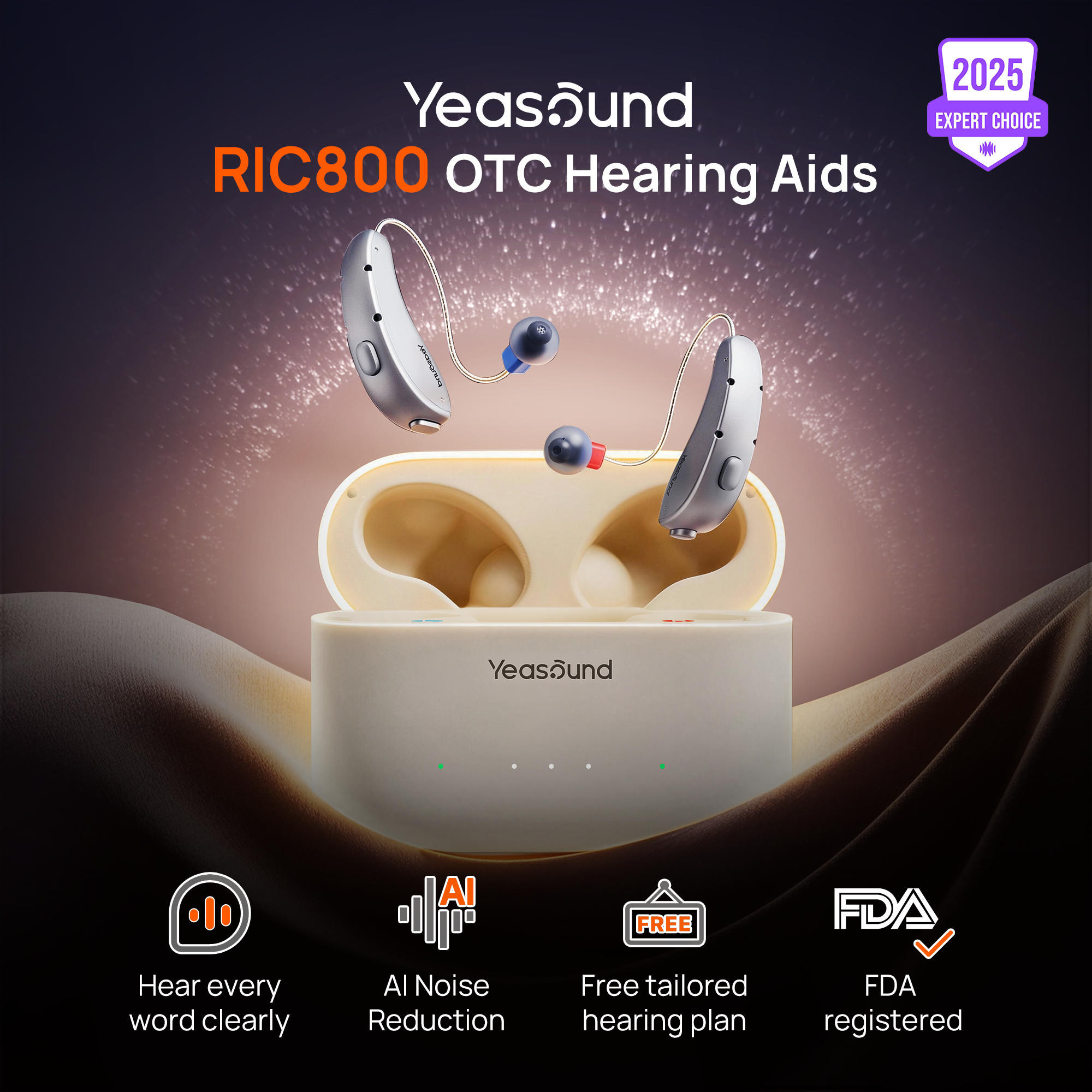
Yeasound RIC800 may be worth considering for adults with perceived mild-to-moderate hearing loss who want both tinnitus relief options and clearer daily conversation support.
It is an FDA-registered OTC hearing aid with six white noise options for tinnitus relief, AI noise reduction, auto speech focus, iYeasound App controls, rechargeable use, Bluetooth streaming for both iOS and Android, up to 31 hours of use on a single charge, and a 100-day return window.
Those features connect to common hesitation:
• "Will it help in noise?" AI noise reduction and auto speech focus are designed for mixed daily environments.
• "Can I adjust it?" App controls let you fine-tune settings.
• "What if I choose wrong?" A return window reduces first-purchase risk.
• "Will it also support tinnitus comfort?" Built-in masking options give a sound-support layer.
This does not make it the best choice for everyone. It makes it a reasonable OTC option to compare when tinnitus and mild-to-moderate hearing difficulty overlap.
A Comparison Table for Tinnitus-Focused Hearing Aid Choices
Use the table below to match the need first, then the device path.
|
Main need |
Useful feature |
OTC may fit when |
Prescription may fit when |
|---|---|---|---|
|
Nighttime ringing |
Masking sound options |
Ringing overlaps with mild-to-moderate hearing difficulty |
Tinnitus is severe, sudden, or medically complex |
|
Noisy conversation |
Speech clarity and noise reduction |
Daily speech trouble is mild-to-moderate |
Speech scores are poor or hearing loss is more severe |
|
Phone calls and media |
Bluetooth streaming |
You want app-based convenience |
You need clinician-programmed settings |
|
Sound sensitivity |
Fine app control |
You can self-adjust safely |
You need guided fitting and counseling |
|
Fear of wasting money |
Return policy and support |
Trial-first approach feels appropriate |
Diagnosis or custom fitting matters more |
This keeps the decision grounded. You are not buying "tinnitus relief." You are choosing a hearing support path that may reduce tinnitus awareness while improving the listening problems around it.
How to Test a Hearing Aid When Tinnitus Is Part of the Problem
Track tinnitus awareness and speech clarity separately.
For 30 days, test:
1. Quiet conversation at home
2. One noisy meal or restaurant-like setting
3. TV dialogue
4. A phone or video call
5. Bedtime sound comfort
6. Wearing comfort and fatigue
Use short notes. Did speech become clearer? Did tinnitus feel less intrusive in quiet moments? Did the device feel comfortable enough to wear? Did sound settings feel easy to adjust?
If speech improves but tinnitus still bothers you, you may need different masking settings or professional counseling. If tinnitus is one-sided, sudden, or paired with concerning symptoms, stop treating it as a product decision and get checked.
Do hearing aids help tinnitus?
Hearing aids may help some people when tinnitus occurs with hearing loss. By improving access to external sound, they may make tinnitus less dominant. Results vary, and hearing aids should not be described as a guaranteed tinnitus cure.
What features matter most in hearing aids for tinnitus?
Look for masking sound options, speech clarity in noise, comfortable fit, app control, rechargeable use, and support. The best feature mix depends on whether tinnitus is mainly a sleep concern, a hearing clarity issue, or both.
Are OTC hearing aids okay for tinnitus?
OTC hearing aids may be appropriate for adults 18 and older with perceived mild-to-moderate hearing loss. If tinnitus is sudden, one-sided, severe, or medically unusual, professional evaluation should come before OTC selection.
What if my tinnitus is only in one ear?
One-sided tinnitus should be checked by a professional, especially if it is new or comes with hearing change, dizziness, pain, or pressure. Do not rely only on masking or OTC hearing aids for that pattern.
How long should I test hearing aids for tinnitus?
30 days is a practical starting period. Track speech clarity, tinnitus awareness, sound comfort, and wearing fatigue across several real situations. If results are unclear, use support or ask a professional to review your hearing profile.
Choose hearing aids for tinnitus by matching the real problem: ringing, missed words, noisy rooms, sound sensitivity, or all of the above. If the pattern is mild-to-moderate and you want a lower-risk OTC trial, compare devices with masking, speech clarity, app control, and a return policy.



Share:
Stay Updated
Get the latest hearing tips & news delivered to your inbox.