




You looked up hearing aids once, saw $3,000-$6,000, and closed the tab. If that price stopped you, start with the broader OTC hearing aids collection to see how much the market has changed.

That is where a lot of people stop. The price is real. Traditional prescription hearing aids do cost that much, sometimes more. But since 2022, there is now a legitimate tier of FDA-registered devices that costs a fraction of the prescription price. For a simple category overview, see OTC Hearing Aids Explained for New Users.
The challenge is sorting through what is actually worth buying versus what only looks cheap.
Why Hearing Aids Cost What They Cost - and What Changed
The traditional $2,000-$6,000 price tag has always covered more than hardware. It includes the audiologist's evaluation, the custom programming session, follow-up fittings, and the clinic's overhead.
In 2022, the FDA authorized a new category of over-the-counter (OTC) hearing aids for adults 18 and older with mild-to-moderate hearing loss. No prescription required. No audiologist appointment required.
The result: a tier of FDA-registered hearing aids ranging from roughly $200 to $800 per pair, using the same core digital processing technology as many prescription devices, but calibrated by the user through an app rather than an audiologist.
What You Actually Get at Each Price Point
| Budget | What you typically get | What you do not get | Notes |
|---|---|---|---|
| Under $100 | Basic amplification (PSAP) | FDA hearing aid classification | Avoid for actual hearing loss |
| $100-$250 | Entry OTC; basic digital processing | Limited noise reduction | Functional for quiet settings |
| $250-$500 | Mid-tier OTC; app control | Limited AI noise suppression | Reasonable for mild loss |
| $500-$800 | Premium OTC; AI noise reduction | No in-clinic programming | Best quality-to-cost ratio |
| $1,500-$3,000 | Flagship OTC or entry prescription | Varies | Higher-touch options |
| $3,000-$6,000 | Prescription care | Cost includes service layer | Best for complex cases |
The sweet spot for most adults with mild-to-moderate age-related hearing loss is the $500-$800 OTC tier. Below $250, you are typically giving up meaningful noise performance. Above $800, you may be paying more for the clinical service layer, which matters for complex cases but may not be necessary for the most common profile.
What to Avoid - The Affordable Hearing Aid Traps
Personal Sound Amplification Products (PSAPs)
PSAPs amplify all sounds indiscriminately. They are not FDA-classified as hearing aids, have no noise intelligence, and usually do not help with the speech-clarity problems that come with sensorineural hearing loss.
Devices with No Return Window
Hearing aids require at least 3-4 weeks of real-world adjustment before you know whether they are working for you. Any brand offering fewer than 30 days to return is not giving you a fair evaluation window.
Bluetooth Claims Without Platform Specifics
Some OTC hearing aids advertise Bluetooth but only support iOS audio streaming, not Android. If you use Android, verify compatibility explicitly.
Extremely Low-Cost Rechargeable Devices
These often claim long battery life but deliver 8-12 hours in real use. Look for a stated battery life of 24 hours or more for all-day wearability.
The OTC Quality Question - Is Affordable Actually Good Enough?
For the most common hearing loss profile - gradual, bilateral, mild-to-moderate sensorineural loss - the honest answer is: often yes, with the right device.
The gap between premium OTC and mid-range prescription has narrowed meaningfully since the 2022 FDA ruling. According to HearAdvisor, an independent hearing aid testing organization, several OTC devices now score comparably to prescription aids in standard noise and speech recognition benchmarks.
The gap persists for severe or profound loss, unusual audiogram patterns that require asymmetric amplification, or situations where the OTC trial period does not produce adequate results.
The practical test is the trial period itself. A 100-day return window is enough time to test a hearing aid in every environment that matters to you: restaurants, meetings, phone calls, and outdoor walks.
A Non-Negotiable Checklist Before Buying Any Affordable Hearing Aid
Before purchasing, verify all of these:
· FDA registered as a hearing aid, not a PSAP
· Return/trial period of at least 45 days
· App-based control for volume, programs, and EQ
· Rechargeable with 20+ hours stated battery life
· Noise reduction specifically described
· Customer support or remote audiologist option
· Bluetooth compatibility confirmed for your phone OS
For setup, app control, and support expectations, the iYeasound app and Yeasound Support Center pages are useful practical references.
What $400-$700 Buys in 2026
This is where the market has created genuine value. At this tier, you get FDA-registered OTC hearing aids with AI noise processing, full app control, IPX8 waterproofing, 30+ hour battery life, and in some cases access to remote audiologist support.
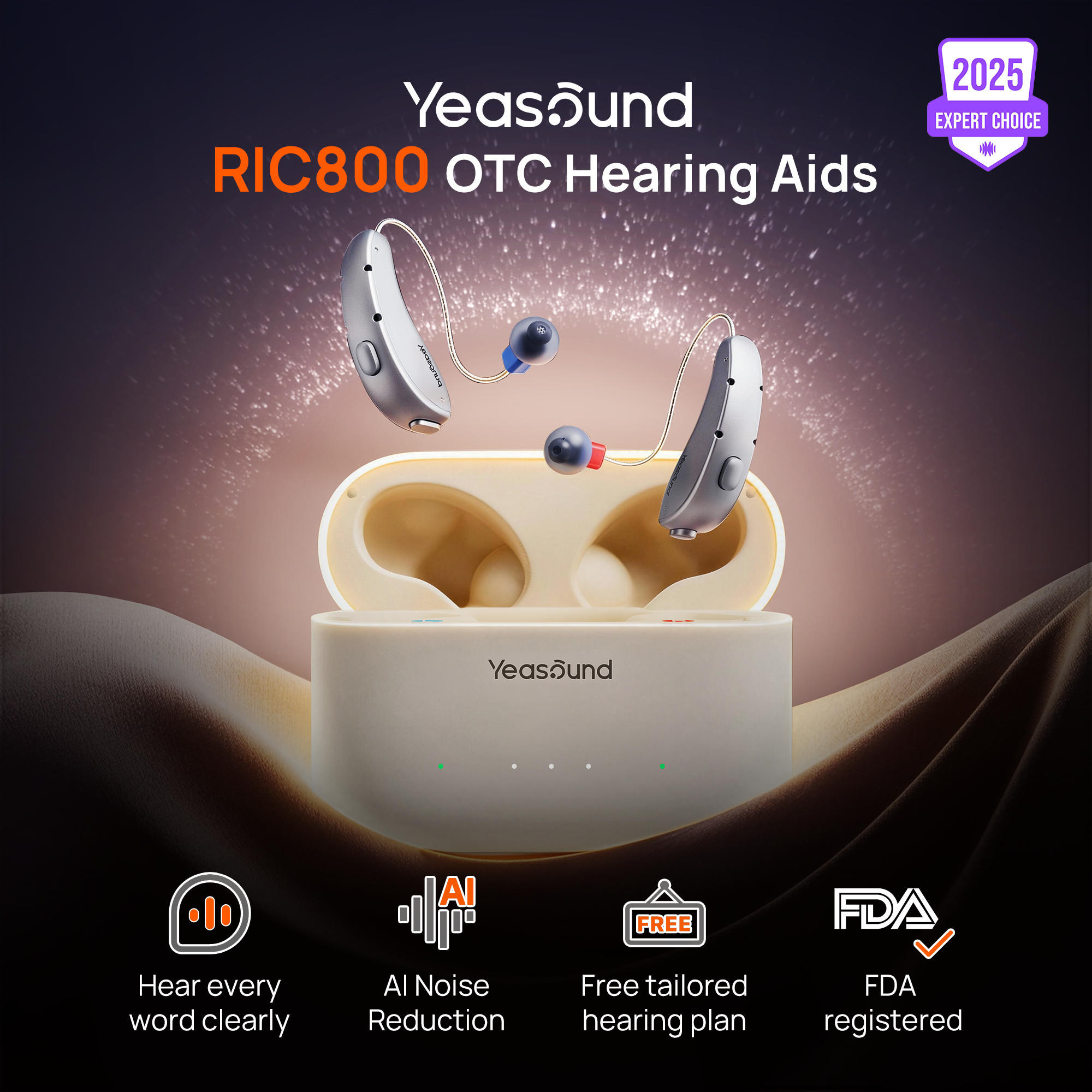
The Yeasound RIC800 at $629 is designed for the active daily user who needs strong noise performance: AI-driven noise suppression, auto speech focus, iOS and Android Bluetooth streaming, IPX8 waterproofing, 31-hour battery life, and a free 1-on-1 remote session with a professional audiologist. The 100-day return window makes it a practical way to test premium OTC features without jumping straight to the prescription price tier.
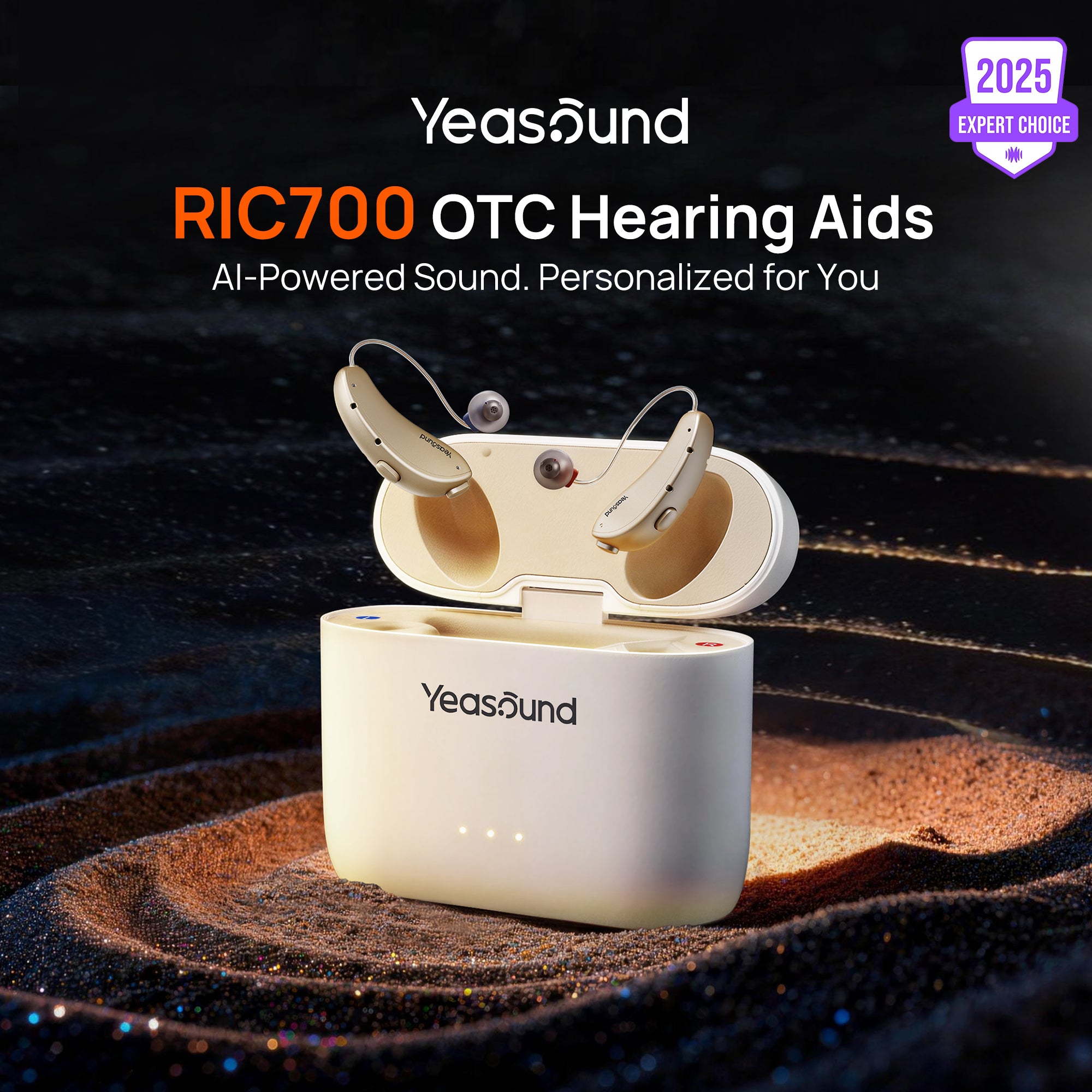
The Yeasound RIC700 Plus at $399 covers the essentials for quieter daily use: smart noise reduction, 31-hour battery, IPX8 waterproofing, iOS Bluetooth streaming, and a 15-minute quick charge that delivers 4 hours of use.
The choice between them comes down mainly to two things: your phone OS and how much your primary complaints center on noisy environments.
FAQ
How much do affordable hearing aids cost in 2026?
FDA-registered OTC hearing aids range from about $200 to $800 per pair. The best quality-to-cost ratio for many adults with mild-to-moderate sensorineural hearing loss sits in the $400-$700 range.
What's the difference between a cheap hearing aid and an affordable OTC hearing aid?
A cheap hearing aid or PSAP amplifies all sounds with little intelligence. An FDA-registered OTC hearing aid uses digital signal processing, app-based fitting, and noise reduction features.
Are OTC hearing aids as good as prescription ones?
For mild-to-moderate sensorineural hearing loss, premium OTC devices can support many daily environments. Prescription devices have an advantage for severe loss or complex audiogram patterns.
Can I get a good hearing aid for under $500?
Yes, with realistic expectations. Mid-tier OTC devices can work for quiet and moderately noisy environments. For stronger noise performance, the $500-$800 tier is more reliable.
Why do some hearing aids cost $5,000 when others cost $400?
The $5,000 device usually includes custom audiologist programming, follow-up fittings, and clinical service. The $400-$700 OTC device separates the device cost from the service cost.



Share:
Stay Updated
Get the latest hearing tips & news delivered to your inbox.